Here’s how you can prepare yourself for a wildfire

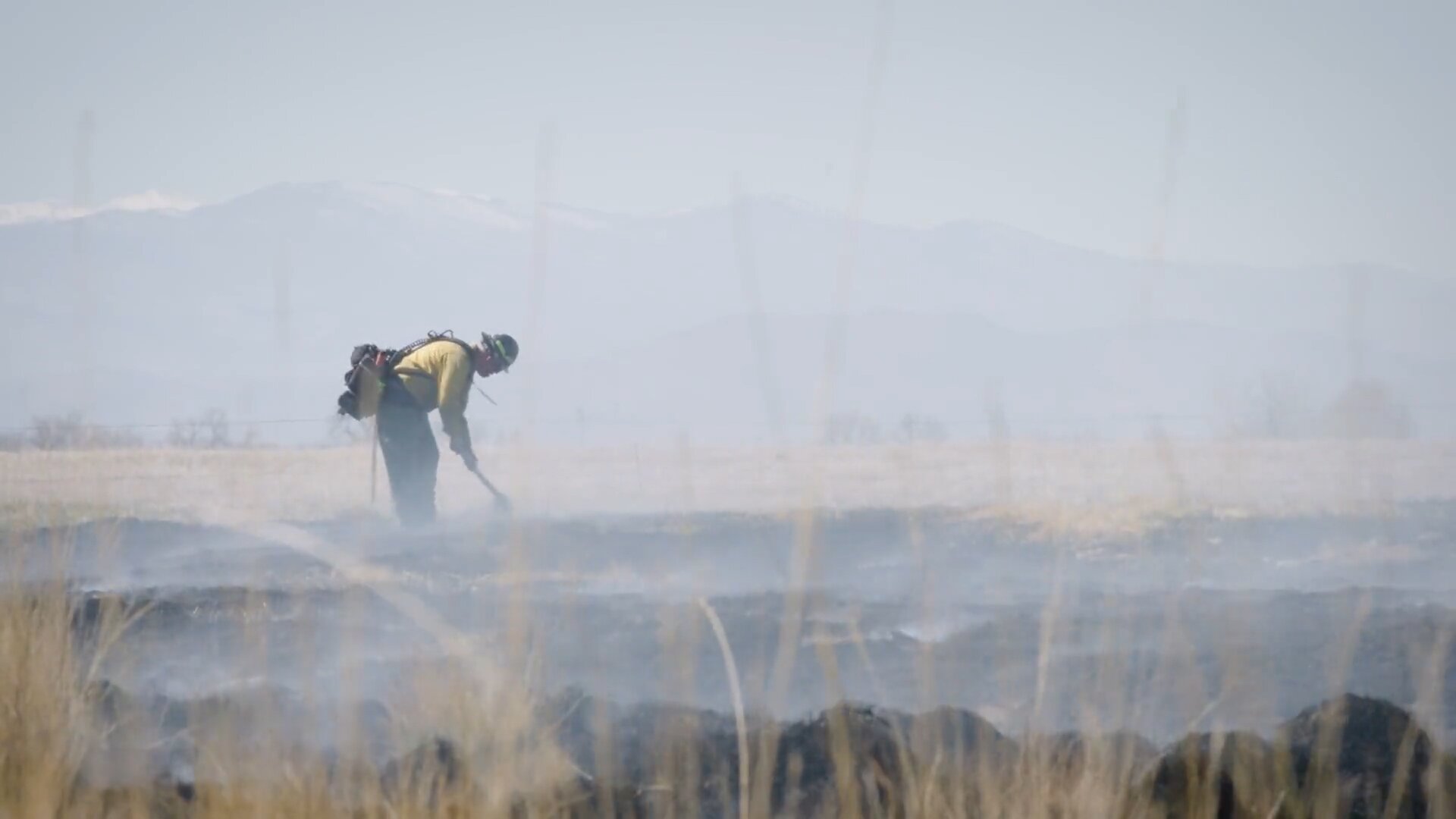
DENVER — For 17 years, Jonathan Ashford has battled wildfires in Colorado. He knows better than anyone that there’s not really a fire season in Colorado — Coloradans are always at risk.
“We can burn at any time,” said Ashford, a firefighter-paramedic with West Metro Fire Rescue.
This year's historically dry winter has the state in drought warnings already, with almost 90% of the state in some level of drought heading into the summer. This dryness is contributing to the risk of wildfires in Colorado; several have already happened this year.
“The biggest concern is that we’ve gone through a long period of time without significant moisture,” Ashford said.
Even residents in the Denver metropolitan area are at risk, Ashford said.
Wildland urban interface (WUI) is a way for fire experts to identify residential communities at risk of wildfire. Neighborhoods and communities near vegetation or grassy open areas are at risk of wildfire.
On the wildfire risk viewer map, the Colorado State Forest Service deemed many areas in the metro at risk, not just the western suburbs at the foothills of the mountains. Areas in Centennial and Parker are covered in risk markers.
Here are some ways Coloradans can prepare themselves for a wildfire.
Go Bags
Preparing a go-bag is one of the easiest ways for residents in at-risk communities to be ready for a wildfire evacuation.
These bags should be accessible — ideally in your home, car or workplace — for a quick evacuation. The thought process behind a go-bag is to have essentials with you if you need to leave at a moment’s notice.
Here are some recommended items for your go bag:
- Non-perishable food and water
- Map with at least two evacuation routes
- Necessary prescriptions or medications
- Extra clothes, glasses, etc.
- Credit cards, cash
- Extra house keys, car keys
- First aid kit
- Dust mask
- Whistle
- Multi-tool
- Sanitation supplies, toiletries
- A flashlight and battery-powered radio with extra batteries
- Copies of important documents (birth certificates, passports, etc.)
Of course, these needs might change if you have pets, live in different climates and depending on your personal necessities, but the general rule is to stock these items and periodically check on them to make sure everything is in working condition.
Ashford said that when the evacuation order comes, go bags end up being the hardest step for a lot of people.
“There’s an emotional element to the items that you have in your home. But sometimes all you have is a couple of minutes to get out of your home,” Ashford said.
Ashford recommended following the instructions from local authorities regarding evacuation routes and emergency shelters, as these logistics are subject to change.
Preventative measures for your home
There are many fire mitigation techniques that homeowners can use. Near the Front Range and into the mountains, many homeowners are familiar with felling trees near their homes, creating fuel breaks or defensible spaces around the vicinity of the home.
While creating a clearing around their house isn’t always feasible for homeowners in the metro, Ashford recommends that after a windy day, homeowners should walk around the property and look for areas where debris, like leaves, trash or any burnable materials, is collecting — these are ignition risks.
“These places where the debris collects are also the same area where embers from other fires can collect,” Ashford said. “They can sit there for several hours, if not several days, and smolder until the right conditions cause a fire."
Homeowners can clear these areas out and cut down on the vegetation around their house. Some common spaces around the outside of the home that are ignition risks are corners under deck and roofs.
As the weather warms, wildfire risk intensifies. Ashford is hoping for consistent rain over the next several months to make up for the winter’s lack of moisture.
“Now’s the time to act — don’t wait until the fire is at your doorstep,” Ashford said.
To stay up to date with wildfires in Colorado, Coloradans can follow wildfire trackers and sign up for county alerts to keep up with the latest emergency alerts.
Based on facts, either observed and verified firsthand by the reporter, or reported and verified from knowledgeable sources. To read more about why you can trust the journalism of Rocky Mountain PBS, please visit our editorial standards and practices page.