El Pueblo History Museum debuts new Black history exhibit

PUEBLO, Colo. — El Pueblo History Museum will unveil its newest exhibit, “Proclaiming Colorado’s Black History,” this Martin Luther King Junior Day.
“It gives me a sense of pride to be able to bring it here,” said Dianne Archuleta, the museum’s director. “People will be able to come in and see actual community members and how they contributed to Pueblo's history.”
The traveling exhibit debuted at the Museum of Boulder in September 2023 and ran through September 2025. The version in Pueblo features local stories from the city, like that of James Beckwourth, a founder of the El Pueblo Trading Post, as well as stories about the city’s first Black police officers.
Another part of the exhibit features the McCulley family, which owns Angelus Chapel, a local funeral home in Pueblo. Established in 1921 as Jones Mortuary, it served as the only funeral home that served Black and Hispanic people in Pueblo. The Jones family arrived in Pueblo after the Great Pueblo Flood in 1921 and served Black and Hispanic Puebloans whose family members died in the flood when other funeral homes refused.
The Joneses, who did not have children, sold the mortuary in 1968 to Charles and Petra Gonzales McCulley, who continued the mortuary's legacy. Today, Yanera McCulley-Sedillo, their daughter, runs Angelus Chapel with the help of her children.
"It's crazy to think about, that death was so segregated,” said Zolanye McCulley-Bachicha, McCulley’s granddaughter who works as a public relations specialist for Angelus Chapel.
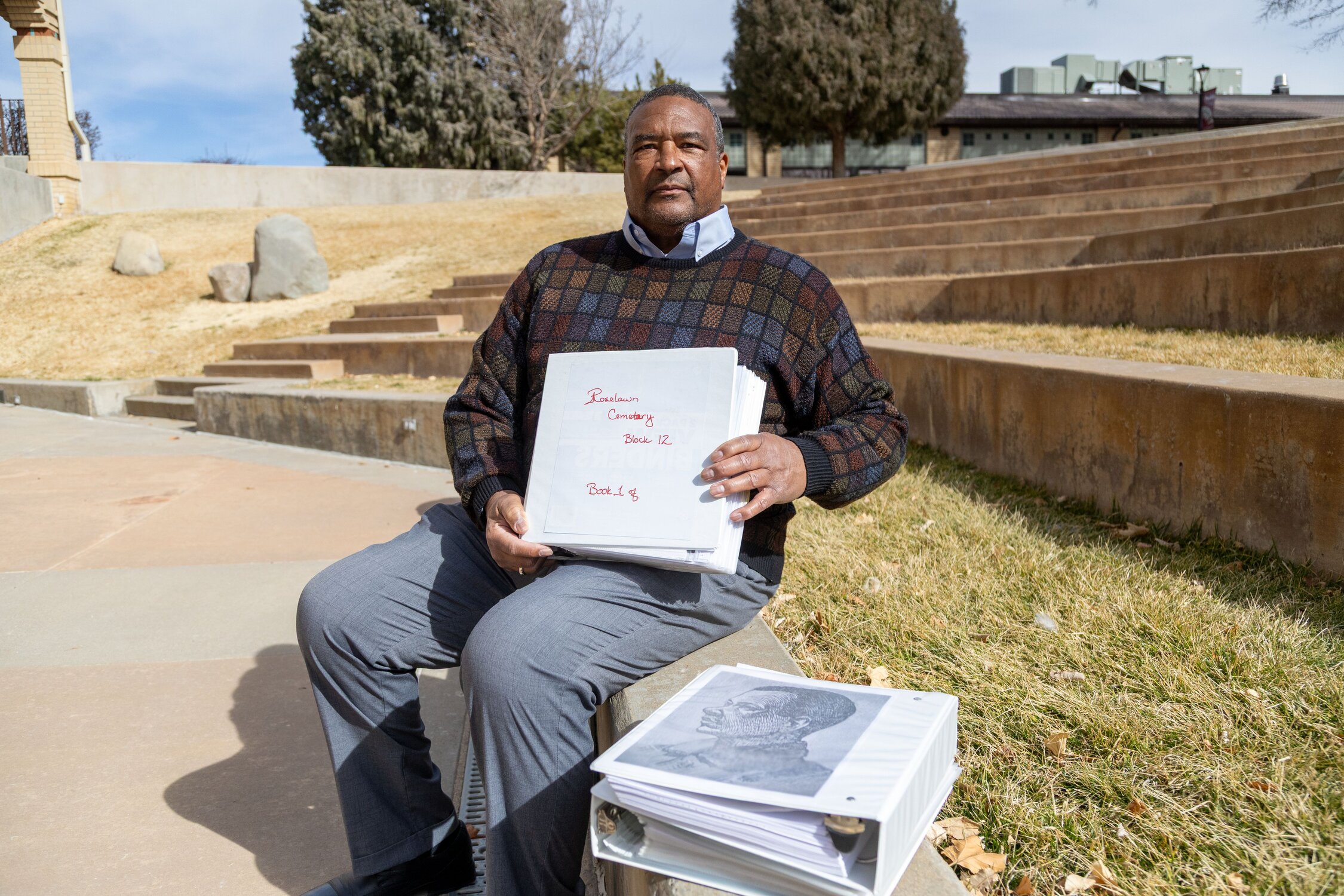
Ray Brown, 71, has researched Pueblo’s Black history since 2014 and contributed many of the local Pueblo stories, like the McCulley’s. Brown was also an integral part of curating the exhibit in Boulder, as well.
“It makes them real to have faces and names. It makes them real,” Brown said.
The exhibit will be open to visitors through Juneteenth on Friday, June 19, 2026.
Based on facts, either observed and verified firsthand by the reporter, or reported and verified from knowledgeable sources. To read more about why you can trust the journalism of Rocky Mountain PBS, please visit our editorial standards and practices page.