Before Durango, there was Animas City, and a story that didn’t add up

DURANGO, Colo. — Colorado isn’t the only place celebrating 150 years in 2026. This year marks the 150th anniversary of Animas City, a small farming town that once stood just two miles north of what would become Durango.
Durango annexed Animas City in 1948, but the town’s legacy still lingers. To celebrate the anniversary, the Animas Museum hosted a presentation aimed at busting a long-held myth about the town’s history.
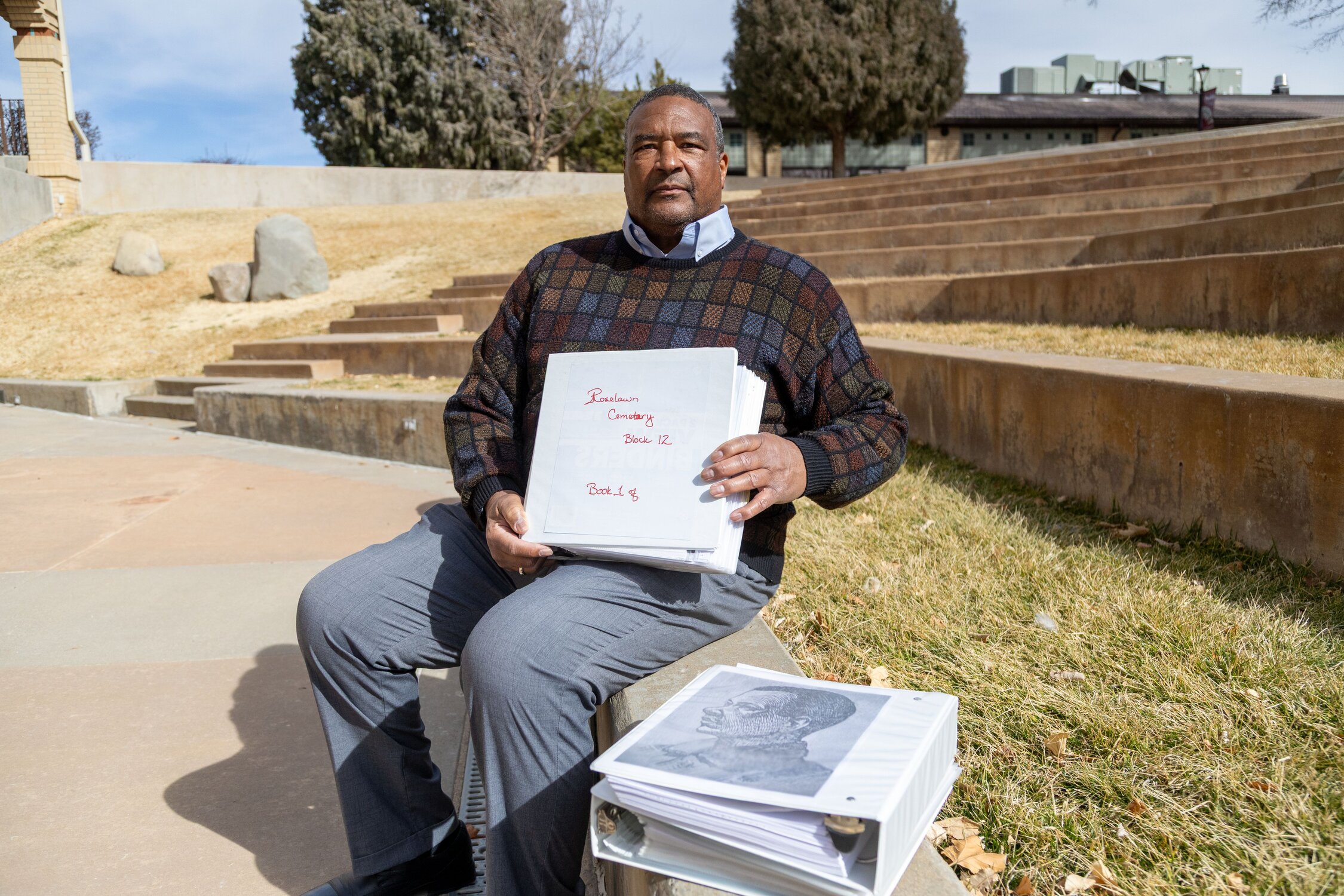
More than 30 people packed into the museum for the talk, filling every seat. They listened closely as local historian Robert McDaniel walked through maps, land documents and census records that challenged a familiar narrative.
The common story has been that Animas City had a chance to become the region’s railroad hub, but town leaders refused offers from the Denver & Rio Grande Railroad, prompting the railroad to bypass Animas City and build Durango instead.
McDaniel said the evidence tells a different story. Based on his research, the railroad company likely never considered Animas City as a potential hub at all.
McDaniel began looking into the Animas City story in 2010, shortly after he retired from his role as founding director of the Animas Museum. It didn’t make sense to him that Animas City leaders turned down a major development opportunity like the railroad. That same year, he put together his first presentation outlining his findings.
McDaniel is a fourth-generation resident of southwest Colorado, born just two years after Animas City’s annexation. He grew up hearing stories about the town and later attended school in the same building that now houses the museum.
The myth originated from Duane A. Smith, an early historian whose interpretations were widely trusted and repeated without close examination of primary sources, McDaniel said. Over time, the idea that Animas City “blew it” became accepted as fact, appearing in books and exhibits.
McDaniel said he could not find any documentation indicating there was ever a meeting between Animas City leaders and the railroad company.
During the presentation, McDaniel asked the audience to raise their hands if they believed Animas City turned down the offer. Most did, including 51-year-old resident Holly Keohane.
“I think what’s important about history and revisiting history is that we tend to gloss over a lot of history,” Keohane said. “It’s a good reminder that what’s passed down is not always the truth.”
Animas City was founded in 1876, just two years after the U.S. government forced the Ute Tribe to cede land in the San Juan region. Unlike nearby towns like Silverton and Ouray, Animas City was not a mining boomtown. It developed as a rural community with farms, small businesses, a school, a post office and fewer than 300 residents by 1880.
Meanwhile, the Denver & Rio Grande Railroad raced to reach the booming mines in Silverton. While railroad engineers initially favored a more direct route into the San Juan Mountains, railroad leadership ultimately chose a longer, more expensive path looping south through New Mexico. McDaniel said the decision was driven less by geography and more by land development opportunity.
Rumors of the railroad coming through the Animas Valley began circulating in the late 1870s. By early 1879, Dr. William A. Bell, a close associate of railroad founder William Jackson Palmer, already started assembling land south of Animas City.
Palmer and Bell were no strangers to town-building. In 1871, they founded Colorado Springs.
Bell found six individuals in the Animas Valley who agreed to sell him their homesteads, and later sold that land to the railroad company. Together, the roughly 600 acres acquired by Bell became the original Durango townsite.
McDaniel’s research shows none of the six homesteaders lived in the region. Census records indicate they lived in states such as Arkansas, Alabama, Missouri and Kansas, and most likely never set foot in La Plata County.
“That process was honestly the use of the Homestead Act,” McDaniel said. “By putting up what I’ll call dummy homesteaders.”
The Homestead Act, passed in 1862, gave U.S. citizens the right to claim 160 acres of government land.
Unlike Animas City, Durango was not an organic settlement. McDaniel said it was a planned project designed to serve the railroad’s long-term interests.
Early town maps show Durango laid out with defined business districts, residential streets and industrial areas. The railroad company positioned Main Avenue to support commerce, placing rail lines, warehouses and smelters nearby to generate freight traffic. The layout allowed the railroad to control transportation, land sales and industrial development from the start.
For McDaniel, correcting the record is not about assigning blame, but about understanding how power, money and decision-making shaped the region and how those stories continue to shape local identity.
“Durango has grown and developed and changed to the point where a lot of people don’t know about Animas City,” McDaniel said. “But a lot of people are descendants of families that had lived in Animas City for generations. It’s very much part of our identity.”
Based on facts, either observed and verified firsthand by the reporter, or reported and verified from knowledgeable sources. To read more about why you can trust the journalism of Rocky Mountain PBS, please visit our editorial standards and practices page.