Inside Aurora’s newest ‘chido’ taqueria

AURORA, Colo. — When the Mexican restaurant Comida closed last September, it left behind a vacant storefront inside Aurora’s Stanley Marketplace.
In November, another taco spot filled the void — this time, with Michelin buzz.
Called Molino Chido, the taqueria is a collaboration between renowned Denver chefs Tommy Lee and Michael Diaz de Leon.
“Molino,” Spanish for “mill”, refers to the process of turning corn into masa. “Chido” translates to cool.
“We’re complementing each other in this project,” Lee said. “He’s a pro at Mexican food and I’ve opened multiple restaurants.”
Diaz de Leon earned a coveted Michelin star in 2023 as executive chef of Brutø, a fine-dining, counter-service restaurant in downtown Denver’s Free Market. Lee’s Chinese restaurant, Hop Alley, continues to earn a yearly feature from the Michelin Guide as a Bib Gourmand restaurant, which the guide uses to recognize “excellent value for the quality of their cooking.”
Together, Diaz de Leon and Lee wanted to build a Mexico City-inspired restaurant inside Stanley Marketplace.
“Restaurants can be very exclusive and not readily accessible, so when we built this restaurant, we wanted to build it around having quality ingredients and quality chefs cooking the food,” said Diaz de Leon.
Aurora already has dozens of taco joints, but both chefs credit the community with being receptive to their new concept. And Diaz de Leon said he’s happy to spread hospitality to other places throughout Colorado — not just Denver.
Michelin Guide came to Colorado in 2023 and has since recognized restaurants in Boulder, Denver and even Aspen. Aurora, however, didn’t make the cut. Molino Chido shares the same building as Annette, whose chef and owner, Caroline Glover, won a James Beard Award in 2022.
Glover spoke about the fact that the Michelin Guide didn’t cover Aurora.
“It’s not about Annette getting a star or not getting a star. It’s more about, what does it mean for the city to not be included when we’re so close to Denver?” she said to Westword in 2023. “I think Aurora has some of the best food in the state, and the most diverse. And it’s not boring. There are a lot of people cooking food they grew up with, and at a very high level of competence.”
City governments, local tourism groups and even private entities often work in tandem — and write checks — to bring Michelin inspectors to their area. Tourism groups in Colorado have spent upwards of $100,000 each year for Michelin coverage.
Even with their past accolades, Lee said Molino Chido’s focus is elsewhere.
“We don’t worry about awards here because it’s not a thing yet. If [Michelin] comes, we can have that conversation, but right now we’re focused on making our food better every day and fostering a good team — that’s all we can do,” said Lee.
Inside the dining room, green fold-up chairs and tables made by third-generation metal fabricators in Guadalajara line the dining room, each piece of furniture reading “Propriedade de Molino Chido.”
“Granted, they’re not the most comfortable chairs, but we wanted people to feel like they’re in Mexico City,” Lee said.
Green and yellow tiles greet patrons walking into the restaurant. On the right side of the entrance, a large horizontal window lets people into the molino room. Here, diners will see two molineras — women working on the mills — turning nixtamalized corn into masa, then masa into tortillas. It's a laborious process that took the team a month to perfect.
It’s typical for the molineras to churn out 2,000 made-from-scratch tortillas every day.
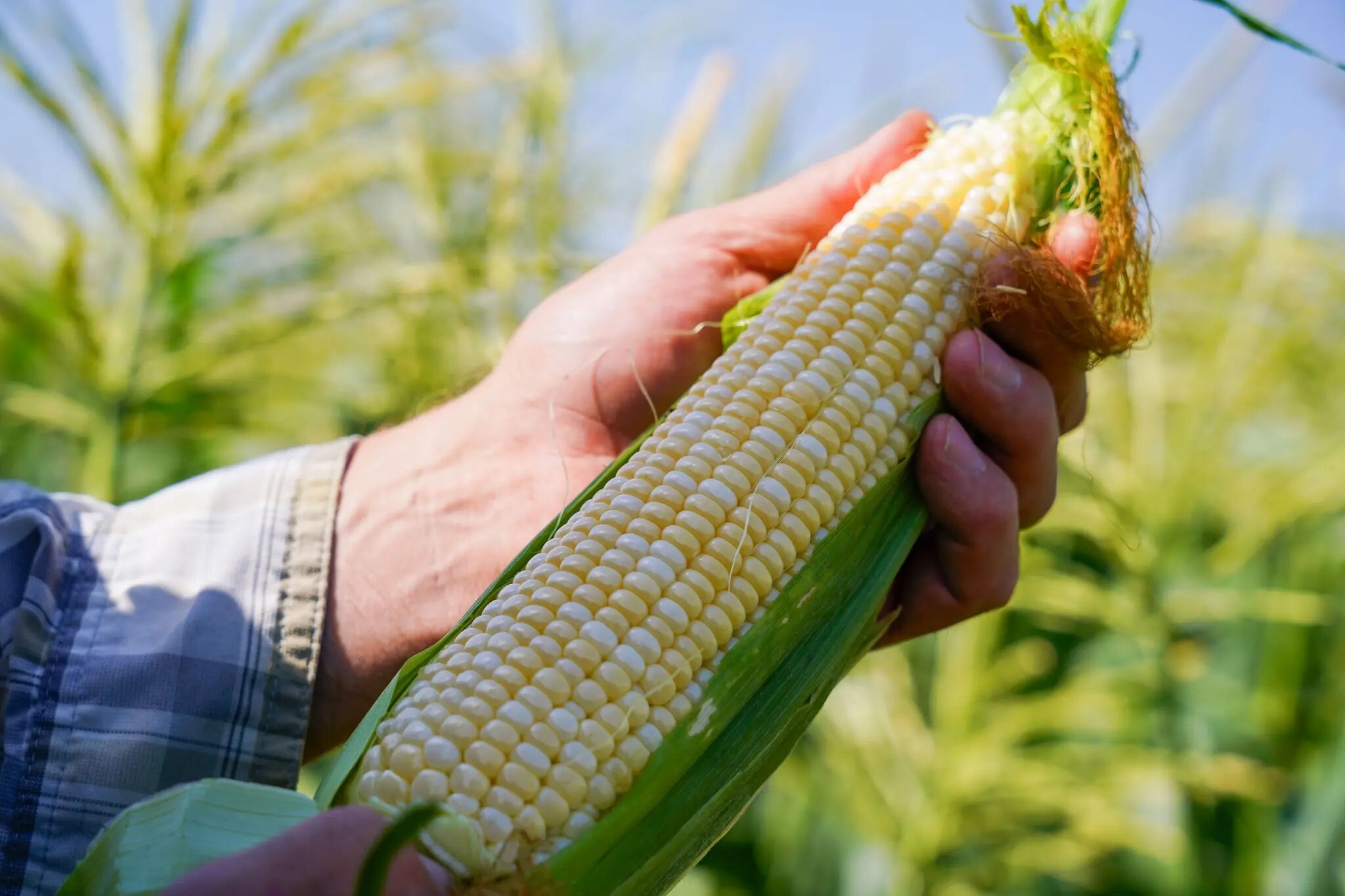
Cooks working the p.m. shift cook the corn — sourced from the Ute Tribe in southwestern Colorado — and simmer it in an alkaline solution, resulting in nixtamalized corn, which rests overnight. The next morning, cooks rinse and dry the corn before grinding it in the molino room, turning it into masa. Then, this soft dough is mixed, rolled out and pressed into the shape of a tortilla.
“This is an ancestral process, and we’re trying to honor tradition,” Diaz de Leon said. “The basis of our menu revolves around the Molino, the mill.”
The restaurant operates with a seasonal mindset, sourcing in-season ingredients from local providers, including bison from Rock River Ranch or vegetables from Esoterra Culinary Garden.
“We try [to] use as many local purveyors as possible. It’s close and dear to my heart and it’s how I cook. That philosophy isn’t going to change just because [Lee and I] are doing tacos,” Diaz de Leon said.
Diaz de Leon’s menu features classics like al pastor, lengua and carnitas tacos at $4.85 a piece. But it also ventures into creative dishes, like the “Dorado,” a crispy taco with shrimp and xo sauce or the “aguachile rojo,” a seafood dish featuring raw chorizo spiced bluefin tuna with watermelon and gooseberry.
Amid the hype of the restaurant’s opening, however, there are some growing pains.
The taqueria originally opened up as a self-service restaurant. Lee said that the first day was “complete chaos,” with how much traffic the restaurant was getting along with the self-service model. Before opening the restaurant, Lee and Diaz de Leon discussed the possibility of going full-service at some point.
They decided to go full-service six days after opening.
Since then, Lee said the experience has been better for both the customers and the staff.
To Diaz de Leon, this restaurant is a huge change. He’s used to serving 22 people at a chef’s table. Now he serves around 350 people a night. The restaurant recently implemented a reservation system to better manage service.
Even with a classic dish like al pastor, the chefs are figuring out how to make the last slice of juicy marinated pork taste just as good as the first slice of the day.
“Part of the process is figuring things out as you go. We live by the theory of Kaizen, trying to get better every single day,” Lee said.
“I’m blessed to have Tommy on my side. He’s done this plenty of times, so he’s minimized mistakes that I would have made as a first-time restaurant owner,” said Diaz de Leon.
In the near future, both chefs are dreaming big.
The restaurant hopes to utilize the entire space for various events. Near the bar, there’s an empty table that Lee is hoping to turn into an “activation space” — a free-for-all space where the chefs can experiment with different food concepts.
Both chefs hope that one weekend, they can host a ceviche bar, while on another weekend, they can bring in half a bluefin tuna on ice and do a tostada night.
Near the kitchen, Lee sees a future where they can implement a standing taco bar, where people can come up and try a variety of tacos and drink some mezcal — all for one set price.
For now, however, they’re going to get through the year, working out whatever kinks come their way.
“I’m very much a believer that if you build it, people will come,” said Diaz de Leon.
“It doesn’t matter where you build it as long as you do right by the staff, by the food and by the guests, the restaurant will succeed and people will come.”
Based on facts, either observed and verified firsthand by the reporter, or reported and verified from knowledgeable sources. To read more about why you can trust the journalism of Rocky Mountain PBS, please visit our editorial standards and practices page.