Rural school in Karval turns to geothermal energy for heating and cooling

KARVAL, Colo. — Workers are drilling 20 wells beneath the Karval School District in eastern Colorado to bring reliable heating and to add cooling to a school that, like many across the state, has long gone without it.
The drilling, which began last August, is part of a $6 million geothermal energy project at the rural school, which houses preschool through 12th grade in one building. The system is expected to be operational by late July. For the first time in 70 years, the one-floor, 25-room building will have control over its indoor climate. The system is expected to last more than 20 years.
Sarah Nuss, the school’s superintendent, said the lack of cool air led to “more headaches” for students and faculty. “When you get more ventilation and better, fresh air quality, I think that's going to go away for staff and students,” Nuss said.
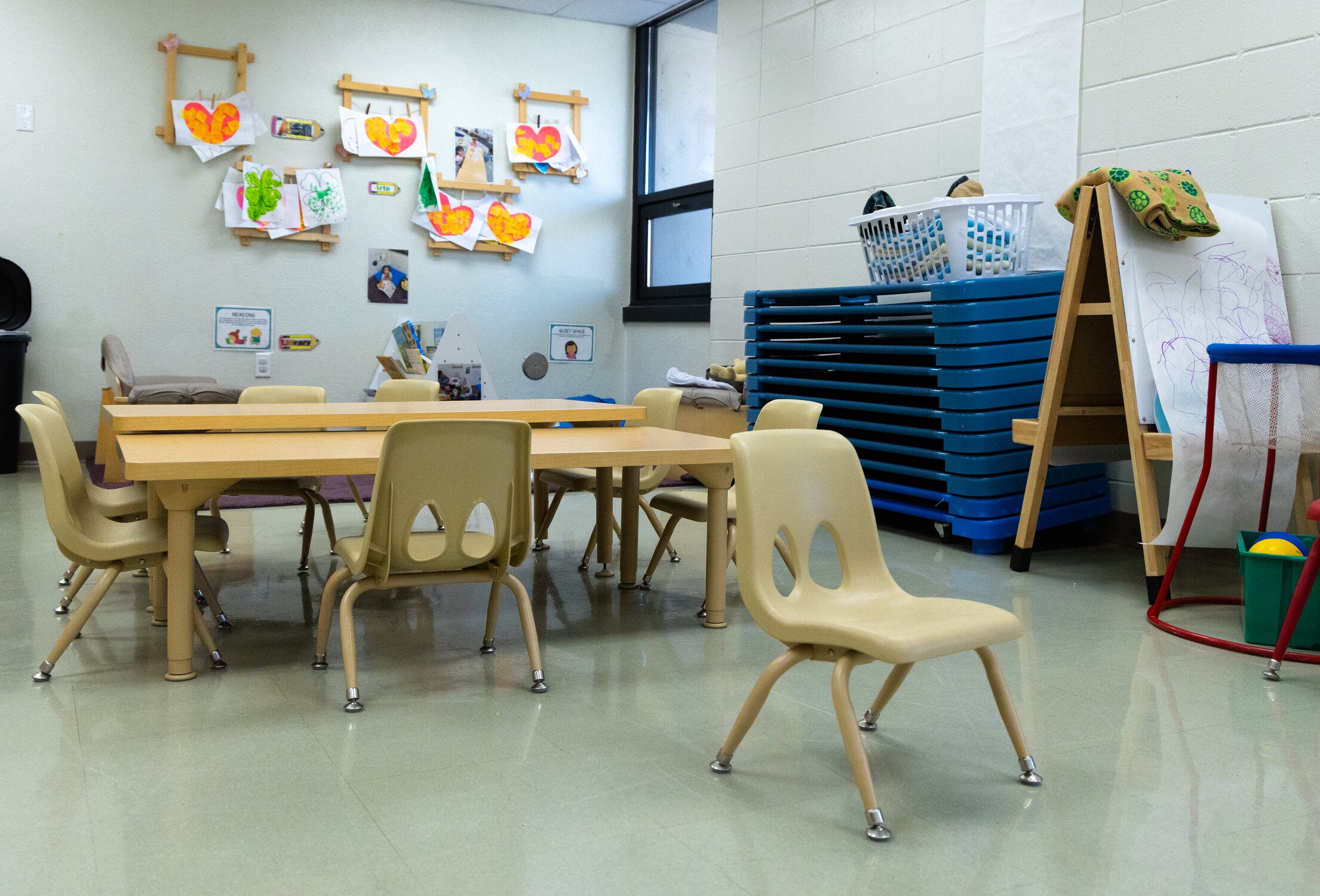
The Karval school has long used an outdated heating system. Built in 1965, the school relies on a boiler-based radiant heat system that was updated in the 1980s. While windows are kept open for ventilation during hotter days, there is no system for actual air exchange, Nuss said. The school once had a blower system designed to circulate more air, but it has been non-operational for so long that many members of the faculty were not aware it existed.
“We were noticing there’s a stale feel to the building because we're not getting a lot of fresh air,” Nuss said. “Basically our rooms are either 10 degrees too hot or 10 degrees too cold and it really depends on what kind of weather we're having.”
According to the Environmental Protection Agency, one in four schools in the nation has indoor air quality problems. Students in classrooms with better ventilation tend to score higher on standardized math and reading tests than those in poorly ventilated classrooms.
The new system will add cooling and improve heating. It will also be more reliable; the existing system can take hours to restart if it goes down.
Aging or nonexistent cooling systems is not a problem limited to the eastern plains. Across Denver Public Schools, 20 schools still do not have air conditioning. At the same time, roughly 10,000 students in the district live with asthma, which health experts say can be caused by long-term exposure to air pollution and other environmental factors. In some Denver schools, asthma rates reach as high as 34%, compared to about 11% across the district and 8.3% nationwide.
Bri-Mathias Hodge, associate director of the renewable and sustainable energy institute at the University of Colorado Boulder, said the Karval’s ground-source heat pump system will be efficient.
“What this does is it just utilizes the fact that the earth, if you go down a little bit, is at a more or less constant temperature… and so it can utilize that as a heat reservoir to either heat or cool, depending on what you need to do,” Bri-Mathias Hodge, a geothermal energy expert, said. “The reason why this is so efficient is because it uses a relatively small amount of electricity to exchange heat with this sort of ‘infinite’ source in the earth.”
Boilers usually cost less to install upfront, but they burn fuel continuously, which makes them more expensive to run over time, Hodge said. Ground-source heat pumps typically cost more to install, but they are cheaper to operate. Systems like these often last around two decades or more.
The Colorado Energy Office awarded a $225,000 grant for the Karval School’s geothermal project. Additional support for the school’s project came from a BEST grant provided by the Colorado Department of Education (about $4 million) and tax credits through the Federal Inflation Reduction Act.
Tax credits for some clean energy projects are being phased out. In July 2025, President Donald Trump signed an executive order directing the Treasury Department to halt work on rules and guidance for clean energy tax credit under the Inflation Reduction Act. The order specifically directs the Treasury to end production and investment tax credits for wind and solar facilities.
The Colorado Energy Office’s grant program has supported 49 projects across the state.
Based on facts, either observed and verified firsthand by the reporter, or reported and verified from knowledgeable sources. To read more about why you can trust the journalism of Rocky Mountain PBS, please visit our editorial standards and practices page.