

After half a century of waiting, he could finally get clean tap water. Other parts of Colorado might have to wait.
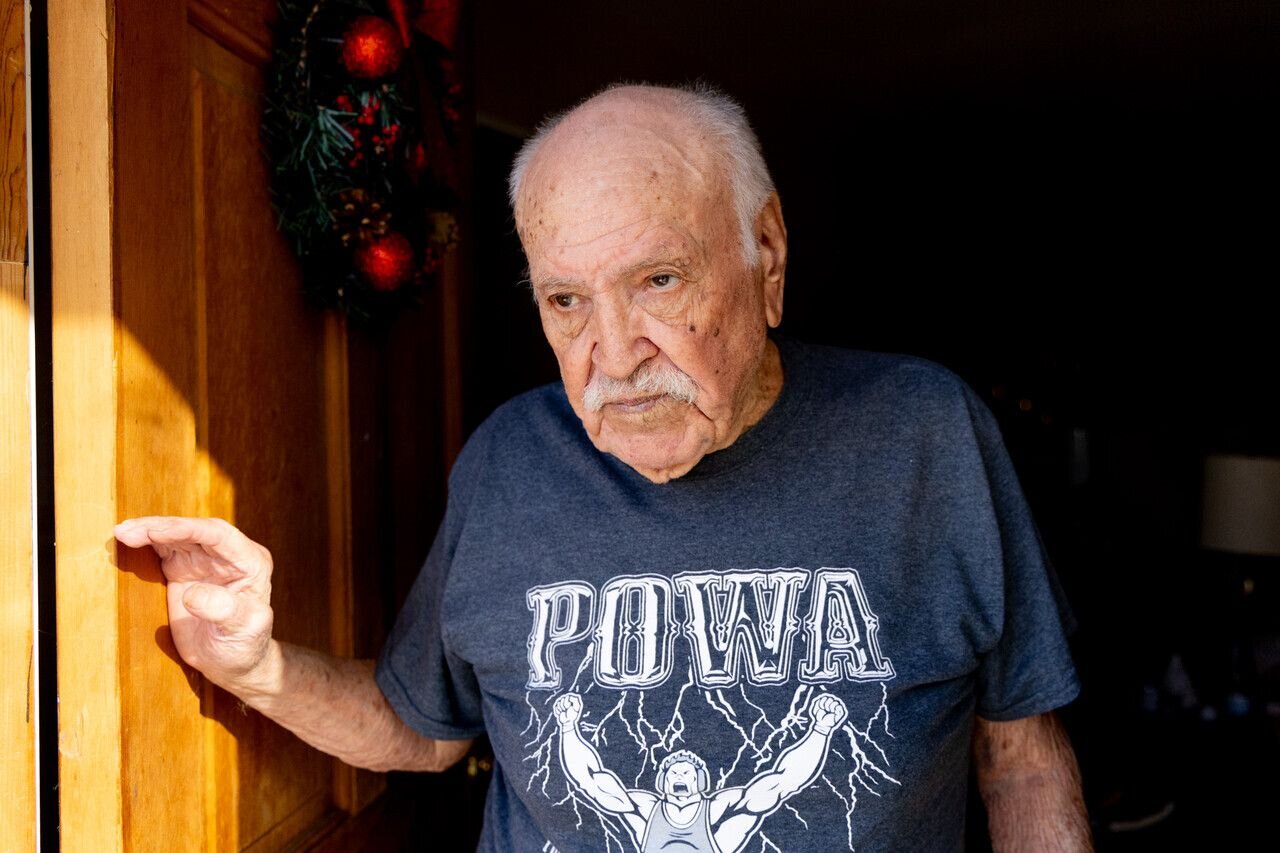
BOONE, Colo. — Dennis Barela has been waiting for more than 50 years for clean, safe drinking water in his hometown.
“I don’t drink the water. I brush my teeth and rinse my mouth, but that’s it,” said Barela, 91, who lives in Boone, Colorado. “I’ve been waiting for this water for decades.”
Barela was a construction worker before he retired. He also opened his home to people with mental disabilities for a decade with his late wife, Mona Barela. Now, in his spare time, he enjoys watching TV and spending time with his children.
His three children take turns bringing him water for drinking and cooking. Every Friday, his daughter, Carla Quintana, 64, drops off two cases of bottled water and two gallons for cooking, she said. For the past 16 months, she has stayed with Barela overnight once a week to care for him.
“I won’t take a shower here,” said Quintana, who lives in Pueblo. She said the water at her dad’s house makes her itch, worsening her eczema, and dries up her hair. More than 30 years have passed since she last drank the tap water in Boone.
Barela’s one-story stucco home — painted peach tan and capped with a red roof — sits about 20 miles east of Pueblo. Like Boone, dozens of communities along the Lower Arkansas River Valley in Colorado have struggled with poor drinking water quality for decades.
Video: Priya Shahi, Rocky Mountain PBS
Congress authorized the Arkansas Valley Conduit, a 130-mile pipeline with spurs, in 1962 as part of the Fryingpan-Arkansas Project to bring clean drinking water to these communities, but the project lagged for more than six decades despite concerns over toxic water supplies. Funding shortfalls and the inability of local communities to cover construction costs contributed to the delays, according to the Southeastern Colorado Water Conservancy District.
In 2009, Congress amended the original legislation to establish a cost-sharing plan: 65% federal funding and 35% local funding.
After Colorado authorized $100 million in loans and grants for the project, construction finally broke ground in 2023. The pipeline is meant to serve 50,000 people across 39 communities, with Boone and Avondale slated to be the first towns to receive water.
By 2025, inflation and design changes had pushed costs from $600 million to $1.39 billion, according to federal and local estimates.
A shadow of uncertainty fell over the project’s future again when President Donald Trump vetoed the bipartisan “Finish the Arkansas Valley Conduit Act” on Dec. 31, 2025. Colorado Rep. Lauren Boebert, a Republican and longtime supporter of Trump, sponsored the bill, which passed the House and Senate unanimously. But the House and Senate did not have enough votes to overturn Trump’s veto. Some lawmakers were quick to say the president’s veto was retribution against Colorado. In December of last year, Trump told Colorado Gov. Jared Polis, a Democrat, to “rot in hell” over the Tina Peters case.
Boebert, one of four Republicans to force a vote on releasing documents related to the Epstein case, said she hoped Trump’s veto has “nothing to do with political retaliation for calling out corruption and demanding accountability.”
If passed, Boebert’s bill would have lowered payments for local communities by cutting the interest rate in half — from 3.046% to 1.523% — and extending the repayment term from 50 to 75 years. The Congressional Budget Office estimated the bill would have cost the federal government less than $500,000.
Colorado Sen. John Hickenlooper, a Democrat, visited the Arkansas Valley Conduit injection site in Pueblo County and said he and fellow Democratic Sen. Michael Bennet would do "everything humanly possible" to deliver on the promises of the “Finish the Arkansas Valley Conduit Act.”
So far, the first 12 miles of the conduit are complete. The Southeastern Colorado Water Conservancy District estimates that current federal funding, which totals $613 million, is sufficient to complete about half of the conduit to Rocky Ford.
“It’s when we get to the second half of the project where it will be challenging to build and repay our portion of the debt,” said Bill Long, president of the board for the Pueblo-based Southeastern Water Conservancy District.
Accounts dating back to the 1950s and earlier show wells near the Arkansas River in southeastern Colorado have consistently contained radium, selenium and other toxic elements — contaminants linked to cancer, heart disease and lung problems.
Today, most of the Arkansas Valley Conduit participants rely on shallow wells, which have high salinity, iron, manganese and increasingly PFAS, said Chris Woodka, senior policy and issues manager for the Southeastern Colorado Water Conservancy District.
Other communities slated to receive water from the conduit draw from deeper wells that tap from shale formations, which carry higher levels of naturally occurring radioactive elements, including uranium, radium and radon, Woodka said. He added that treating wastewater from these wells can also produce high selenium levels or radioactive byproducts.
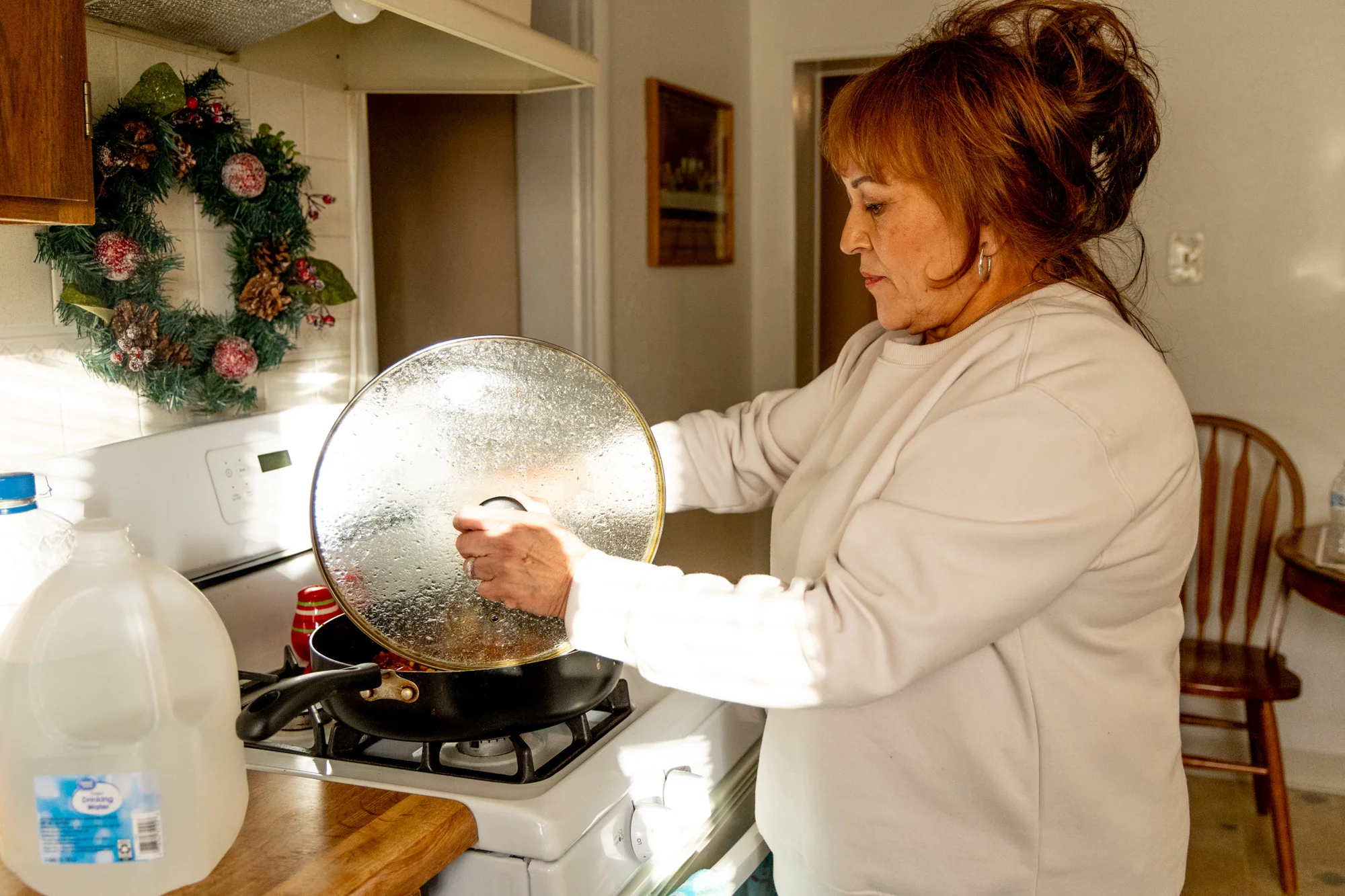
“We need the water. My dad needs it. He’s 91 years old and he’s been here for a long time. These new families that are out here, they need it. There's a lot of little kids out here; they need it,” Quintana said.
Clean water could arrive in Boone and Avondale as soon as 2027 or early 2028, once the chemical injection site is completed, Woodka said. Barela, who passionately says he wants to live up to 115 years old, hopes to see the day clean water reaches his pipes.
But many things are still “up in the air” of when the project will be completed and how it will get done, according to Long.
Trump’s feud with Colorado has disproportionately affected communities that overwhelmingly supported his campaign. Quintana said she did not vote for Trump. She said it’s confusing to her that many people in Boone, including her father’s neighbors, did.
“It’s really sad that Trump is doing this to these people because we do need this project done,” Quintana said. “It was started … it needs to be finished. It’s hurting a lot of families.”
Based on facts, either observed and verified firsthand by the reporter, or reported and verified from knowledgeable sources. To read more about why you can trust the journalism of Rocky Mountain PBS, please visit our editorial standards and practices page.