CPW celebrates successful walleye spawning despite warm water temperatures

PUEBLO, Colo. — The birds hadn’t even begun to chirp as the sun rose over Pueblo Reservoir March 18. Shouts from the boathouse floating on the reservoir interrupted the stillness of the dawn.
“Ripe!” said Mark Elkins, a volunteer with Colorado Parks and Wildlife.
Another volunteer marked a tally under the word “ripe” on a white board inside the CPW boathouse, next to the columns for “green” female fish and for male fish. Ripe means the eggs are ready to come out of the belly of the female fish and green means the eggs are inside of the female but not ready to come out yet.
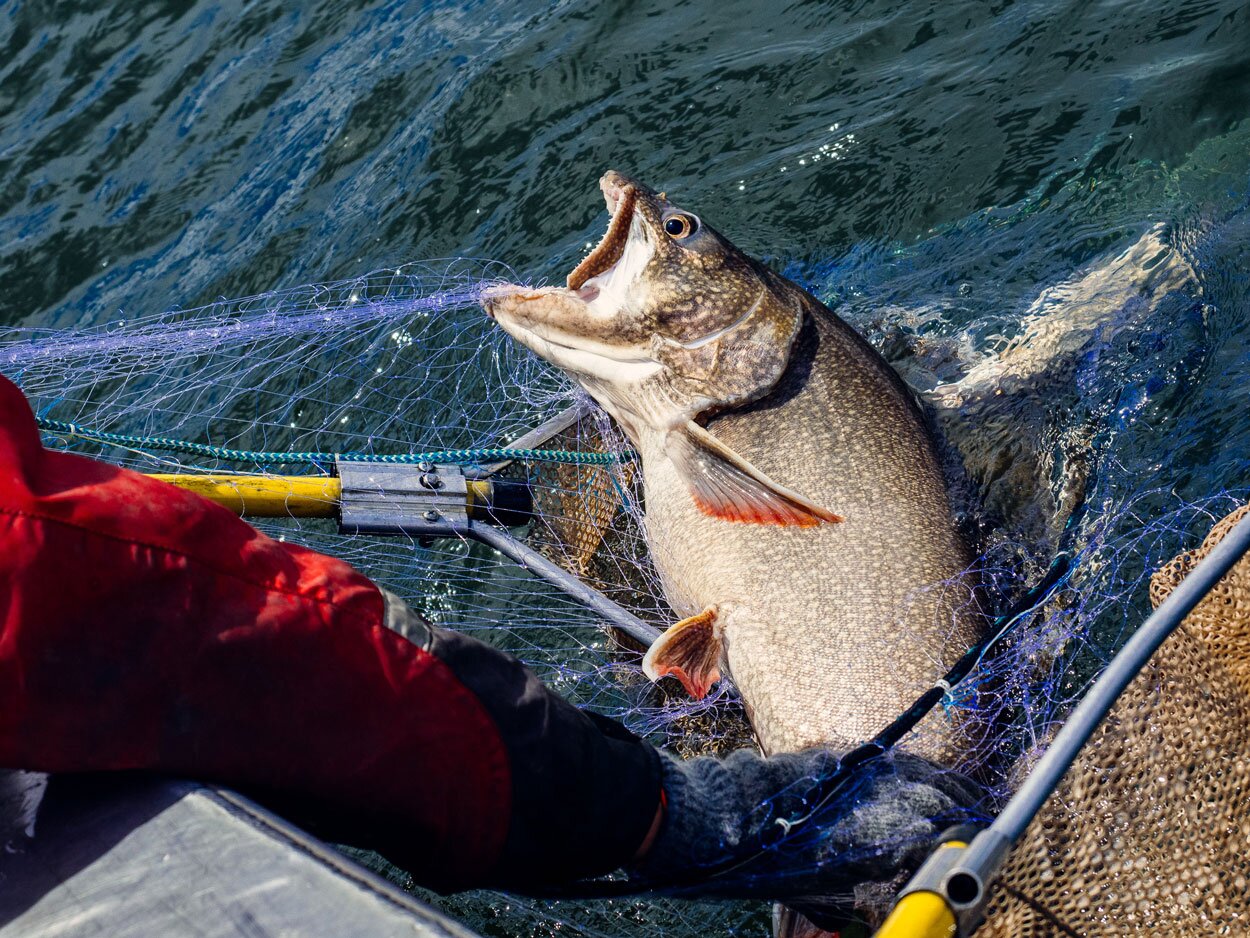
Elkins volunteers for CPW’s annual walleye spawning project, which dates back to 1988 at Pueblo Reservoir. Volunteers and CPW staff catch walleye in gill nets, collect eggs and sperm from the male and female fish, fertilize the eggs and send the fertilized eggs to the Pueblo hatchery until the fry — the juvenile fish that can survive on their own — are ready to be released back into Pueblo Reservoir and other waters statewide later in the spring.
This year’s efforts began March 16 and continued until CPW reached the statewide egg goal of 127 million fertilized eggs at the end of March. Walleye spawning is also conducted at Cherry Creek Reservoir.
CPW reached its statewide egg goal despite record low snowpack and uncertainty that warm water conditions brought, CPW aquatic biologist Carrie Tucker said. Normally, when CPW starts spawning walleye at Pueblo Reservoir, water temperatures are around 38 degrees; this year, the water temperature has been 43 degrees, with some parts of the reservoir reaching 50 degrees.
The unseasonably warm water temperatures cause the walleyes’ eggs to ripen sooner than normal, and Tucker had worried that her team would miss the peak of the spawning season and be unable to collect enough eggs.
Video: Chelsea Casabona, Rocky Mountain PBS
Walleye fish are not native to Colorado and were introduced to the state in 1949, but they are an important part of the state’s recreational fishing, said Cory Noble, an aquatic biologist for CPW. Walleye are one of the most popular fish for anglers, Noble said.
“Walleye spawning is a huge lift,” said Tucker, who is also the team lead for the walleye spawning at Pueblo Reservoir.
“It takes basically an army to run this operation, but it's still a lot of fun and we get to see a lot of really awesome fish,” she said.
For angler and CPW volunteer Dan Frankowski, the biologist's efforts are paying off.
“I have no idea what they do, but whatever they do, it's the right thing,” said Frankowski, 82, who has been volunteering for the walleye spawning project since the late 1980s.
Frankowski said that since he first started volunteering, he’s seen an increase in the amount of eggs the team can retrieve during the spawning project and also noted that there has been an increase in the size and amount of walleye in Pueblo Reservoir.
Based on facts, either observed and verified firsthand by the reporter, or reported and verified from knowledgeable sources. To read more about why you can trust the journalism of Rocky Mountain PBS, please visit our editorial standards and practices page.