Competing bills could determine future of data centers in Colorado

DENVER — As more than 250 bills make their way through the Colorado legislature this session, two competing bills could determine the future of data center development in the state.
At least 38 states currently offer tax incentives for data center development, and some Colorado lawmakers are hoping to hop on that bandwagon with proposed bill HB26-1030.
“Ultimately it’s a competitiveness factor,” said Rep. Alex Valdez, a Democrat representing parts of Denver and a main sponsor of the bill, which is currently under consideration.
“Colorado is one of only 12 states that doesn't have any kind of incentive for this development. There's a lot of revenue that comes. And sometimes you have to give a little to get a lot,” Valdez said.
The bill Valdez is sponsoring, along with Democrats Rep. Monica Duran and Sen. Kyle Mullica, would offer a sales and use tax exemption for 20 years to data centers operators that commit to making a $250 million investment within five years. Other conditions for the tax exemption include committing to green building standards and an environmental sustainability plan.
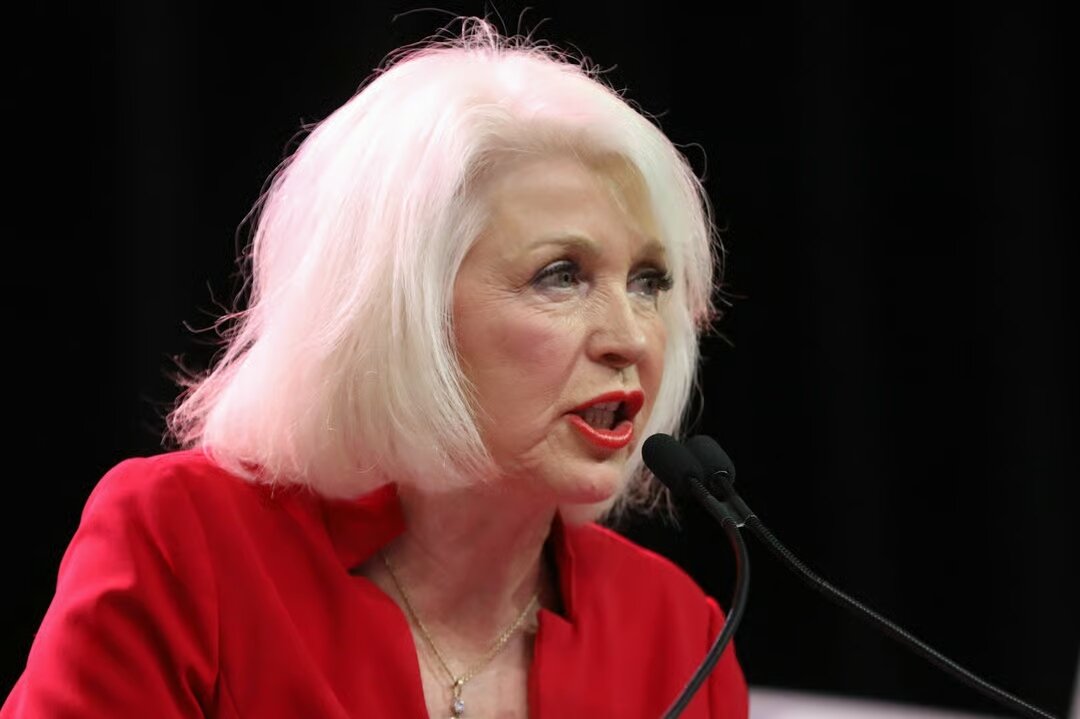
But Sen. Cathy Kipp, a Democrat representing Larimer County, along with Democratic Rep. Kyle Brown, is sponsoring an alternative data center bill that proposes stricter regulations without tax incentives.
“I just don’t think we should be subsidizing the wealthiest companies on the planet,” Kipp said.
The legislative debate comes at a time of both increased development and widespread protests against data centers. More data centers are cropping up across the country as the demand rises for AI, which requires a tremendous amount of water and electricity.
“Effectively bringing these operations to the state of Colorado with good regulation is much better than saying, ‘go pollute next door and it won't affect us,’ because it will,” Valdez said. “If all of a sudden every mega data center is in Cheyenne and they're belching out a ton of fossil fuel emissions and they're also consuming water, that hurts us all.”
The "sales and use tax exemption" for data centers is a common state-sanctioned tax incentive among the 38 states that are incentivizing data center development. Some other states also provide property tax exemptions. The sales and use tax exemption could go toward equipment and machinery purchases such as servers, racks and cables, said Adam Thimmesch, a law professor focused on state tax policy at University of Nebraska.
“A sales tax like this has a little bit less danger than broad-scale corporate income tax reductions,” Thimmesch said.
“As a matter of sales tax theory, this tax incentive is a good thing. Those business purchases [of equipment and machinery] should generally be exempt from sales tax anyway,” he said. “[Otherwise they could] just increase their prices and then the consumer pays.”
But Thimmesch warned that a 20-year time horizon can be risky for a relatively unpredictable and unstable industry.
“You don't know what it's going to look like in five or 10 years,” he said. “It commits the government. So it does raise the stakes in a way that is worth really thinking about.”
The bill Valdez is sponsoring would create a nine-person administrative body to review and oversee contracts with data center operators. That body would include one member with experience in clean and renewable energy and one member with experience in water projects or water resource management.
“Right now, data centers can come here, plop down, make a deal with a utility company outside of the government and make a deal with the water authority outside of the government,” Valdez said. “We have no regulatory oversight of that on the state level.”
Valdez said the tax credit lets the state “steer folks into a regulatory environment.”
“The authority [would be able] to essentially certify that this won't have a negative impact on existing customers or utilities,” he said.
“We’re saying to get the government benefit, you have to abide by these rules.”
Colorado currently has at least 80 data centers either operating or in development, according to S&P Global 451 Research. Most are in the Denver area. The energy the centers use is relatively small compared to the “hyperscalers,” the biggest data centers being built across the U.S. amid the rapid proliferation of AI.
“Chances are you live close to a data center or don't know it, and it's because they aren't a nuisance here. They aren’t pulling all of our water pressure away,” Valdez said. “But we need to ensure going forward that that doesn't change.”
Valdez touted the ability for data centers to spur the expansion of tech jobs and a growing tech sector, but research hasn’t supported that.
A recent paper from researchers at the University of Houston and University of Notre Dame showed that of the 38 states that have created tax incentives for data centers, only one saw an increase in the concentration of tech jobs.
“In Ohio we found some positive effects, although very tiny economically,” said Marco Giacoletti, a finance professor at the University of Notre Dame and co-author of the report.
“The boost to employment through the development of data centers is temporary,” he said. The construction companies tasked with building the centers enjoy most of the employment and economic benefits.
The idea of subsidizing data center development is not new. It dates as far back as the early 2000s with the dot-com boom. At the time, most data centers focused on internet connectivity, web hosting services and later cloud computing. Today, the rapid development in data centers is largely driven by the growth of artificial intelligence and machine learning.
Currently, Virginia leads the way with the highest number of large data centers in the U.S. — it’s home to roughly 35% of the biggest data centers worldwide. While it’s led to a boon in economic development and jobs, it’s also created challenges for the state.
Complaints of noisy hums abound. And a Bloomberg study found that in areas near significant data center activity, electricity now costs 267% more a month than it did five years ago.
In 2024, Xcel Energy, the largest provider of electricity to Colorado, wrote to the state’s Public Utilities Commission that it anticipates data centers will become the single largest driver of its projected energy growth. Data centers are anticipated to account for 62% of projected energy growth and 72% of projected peak demand growth in the state, Xcel found.
But Rep. Valdez said large power consumption from data centers could actually reduce costs to consumers.
That’s because a big portion of electricity bills are fixed costs that utility companies charge to recuperate the amount they’ve already invested for things like poles, wires and power plants. Utility companies charge rates based on how much electricity their users are consuming. So if utilities can bring in a new large customer like a data center without increasing their fixed costs and having to invest in new infrastructure, the overall costs get spread out, which — in theory — can put downward pressure on prices.
Valdez’s bill aims to ensure that a data center will not cause “unreasonable cost impacts” to ratepayers, and calls for data centers to work with utility companies on funding and cost recovery — though the details of how that would work haven’t yet been hammered out.
Kipp and Brown’s bill, SB26-102, has stricter environmental regulations. If passed, it would require data centers that meet a certain energy threshold to generate, purchase or acquire electricity generated from 100% renewable resources by 2031 to meet all of the center’s total annual electricity consumption.
“We’re saying [data centers] have to bring new renewables online because they’re asking us to expand our limited grid to meet their very large power needs,” Kipp said.
“We want to ensure that we are still able to meet our climate goals in Colorado.”
Valdez said his bill would require 100% renewable energy by 2040. “We think that’s a [more] reasonable amount of time to get there,” he said. “We just need to be realistic as we bridge this gap from where we’re at today and what we will have in the future.”
In Nevada, Google is developing an enhanced geothermal energy project that’s providing carbon-free energy to the grid. This energy will power Google’s data centers in the state.
“I think that that's a really exciting example of where a data center can use its resources to help advance new clean energy technologies,” said Stacy Tellinguisen, deputy director of policy for Western Resource Advocates, a part of the coalition backing Kipp and Brown’s bill.
Kipp and Brown’s bill would also include strict consumer protections. The bill states that a data center operator must pay upfront or enter into contracts with a utility that lasts at least 15 years — and pay for certain infrastructure and resource costs.
“There are lots of hidden ways that other customer classes [currently] end up subsidizing data centers,” Tellinguisen said.
“They [data centers] could require new transmission lines and new distribution systems,” she said.
The 15-year contract Tellinguisen and her coalition are proposing is aimed at preventing utility companies from passing those costs to consumers.
“If utilities overbuild to meet these loads and the loads don't materialize or come in at a much lower level, then other customers are potentially left holding the bag and paying for those costs,” she said. “And that has direct impacts on affordability.”
Rocky Mountain PBS asked Kipp if there was any possibility that the two bills could eventually merge and become one.
“In order for my coalition to agree to any kind of incentive, we’d probably want even stricter standards than we’re proposing in our bill,” she said. “I don’t see that necessarily happening.”
Both bills are currently under consideration in both the Senate and House and have been sent for review to the Senate Committee on Transportation and Energy and the House Committee on Energy and the Environment.
Based on facts, either observed and verified firsthand by the reporter, or reported and verified from knowledgeable sources. To read more about why you can trust the journalism of Rocky Mountain PBS, please visit our editorial standards and practices page.