New bill aims to raise overtime threshold for farmworkers to 56 hours

Thursday, April 16 update: The Colorado House approved the farmworker overtime threshold bill on its third reading, April 16, in a 33-32 vote. The bill now goes to the governor's desk.
Read our original reporting below:
DENVER — Colorado lawmakers are weighing a bill that would raise overtime thresholds for farmworkers, reigniting a debate over a labor policy adopted just five years ago.
If passed, the bill would raise the number of hours farmworkers must work before earning overtime from 48 hours to 56 per week. The bill, sponsored by Senators Robert Rodriguez (D-Denver) and Cleave Simpson (R-Alamosa), as well as Representatives Matthew Martinez (D–Monte Vista) and Ty Winter (R-Trinidad), passed the Senate last month in a 19-16 vote.
While the bill awaits a full House vote, it has exposed divisions across the agricultural industry, among both farmers and farmworkers. If enacted, the law would take effect Jan. 1, 2027, and could change how many hours farmworkers work, how much they earn each week and how much farmers must pay in labor costs.
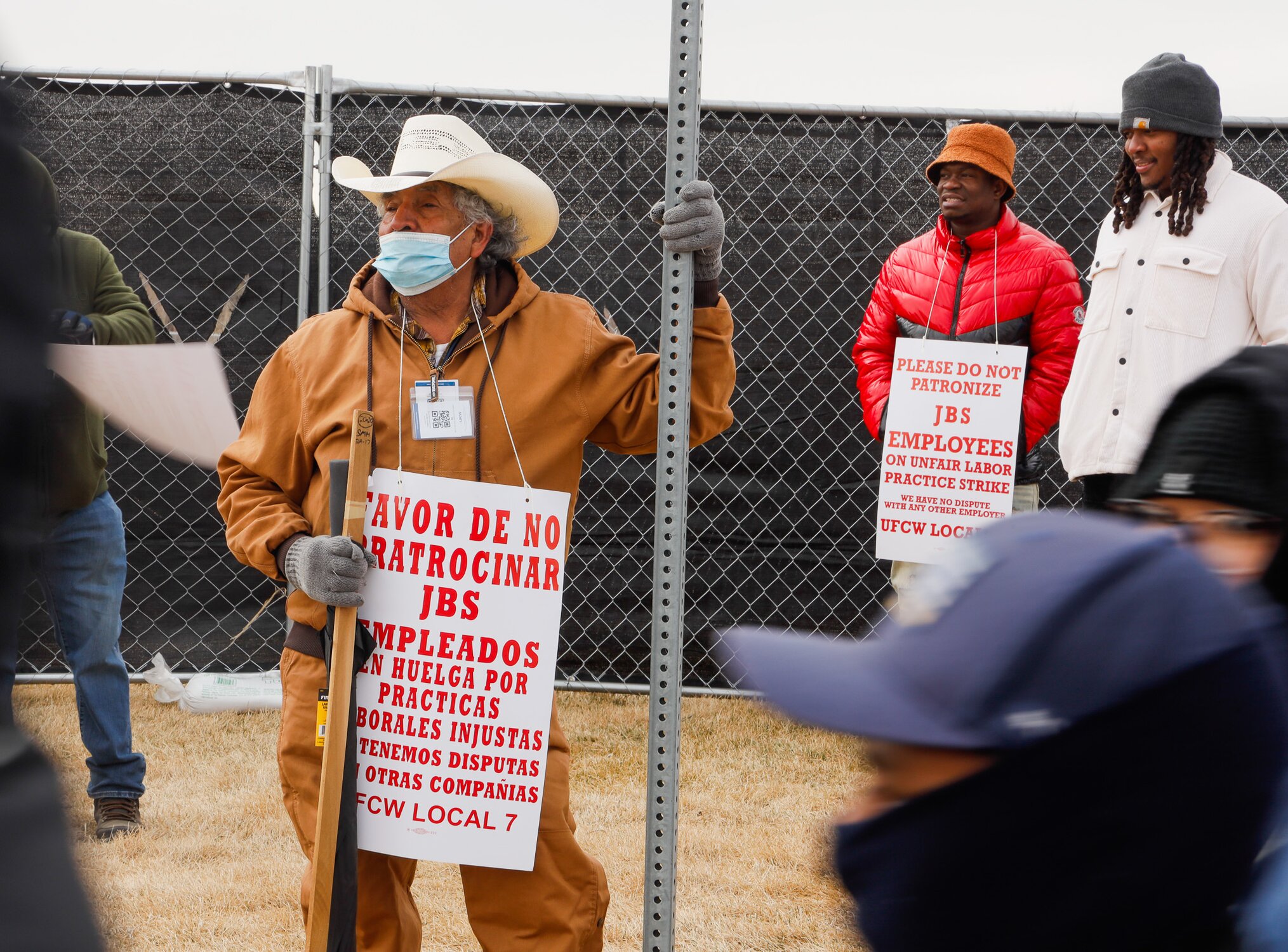
“We think that the bill is a rollback of critical overtime protection for agricultural workers who only just acquired these rights and they're already threatening to roll them back,” said Hunter Knapp, development director for Project Protect Food Systems Workers, a nonprofit that supports agricultural workers across Colorado.
In 2021, Colorado passed the Agricultural Workers’ Rights Act, expanding protections for agricultural workers, including the right to minimum wage and overtime pay, which they had historically been exempt from. The law required the state labor department to phase in overtime rules that are currently in place: overtime pay after 48 hours per week, with limited exceptions allowing up to 56 hours for highly seasonal work.
While other industries are protected by the Fair Labor Standards Act of 1938, which set minimum wage and overtime requirements of time-and-a-half after a 40-hour work week for non-salaried workers, agricultural workers were exempt from it.
“At the time, the southern Democrats had a lot of power in Congress and the agricultural workforce in the South was predominantly black and brown workers,” Knapp, who is also an attorney in Colorado, said. “They were strongly motivated to maintain the racial hierarchy in the south and so when this legislation was being created back in 1938, they insisted agricultural laborers be excluded. The racist decision, ultimately, has persisted for almost 100 years.”
In 2024, PPFSW surveyed 587 farmworkers — a majority of whom spoke Spanish as their first language — and found that about a third said they worked more than 56 hours a week that year. About 40% said they received overtime pay, while 15% said they sometimes or never received overtime pay, even when they worked overtime hours.
Knapp and other farm worker advocates say the bill will primarily benefit dairies and large livestock operations for large corporate farms that are in Colorado and it will harm farm worker rights.
The Colorado Farm Bureau, the state’s largest organization representing farmers and ranchers and advocating for agricultural business interests, supports the bill.
“The increase in overtime regulations since 2021 has put pressure on already struggling farms and ranches, resulting in capped hours for workers as agriculture faces increasingly tight margins,” Melissa Weaver, a spokesperson for CFB, said.
Weaver added that the bill is not removing overtime, but instead sets the threshold at a number that allows workers to maximize their hours and keeps farms running.
According to a 2025 report by Colorado State University Extension, in collaboration with the Colorado Department of Labor and Employment, a survey of 73 agricultural employers found that only 9% regularly pay overtime to all workers. The report also found that many employers are adjusting schedules and workflows to avoid triggering overtime thresholds, primarily by reducing total hours worked and shifting production methods to rely on fewer workers.
“Typically, the way most farmworkers work is you put in a lot of hours one week and then the next week you may not get as many,” said Chad Franke, president of the Rocky Mountain Farmers Union. “The problem with the 48-hour workweek before overtime kicks in is farmers aren’t making money right now.”
The Rocky Mountain Farmers Union represents 20,000 member families of farmers and ranchers across Colorado, New Mexico, and Wyoming. Franke said once farmworkers hit 48 hours and overtime kicks in, many farmers can’t afford the higher pay and end up having to send workers home instead of keeping them on longer.
A competing bill earlier this year, sponsored by Democratic Sen. Jessie Danielson, would have lowered the overtime threshold for farmworkers to 40 hours per week, aligning with most industries. The measure was rejected by a Senate committee last month as lawmakers instead advanced with a competing bill to increase the threshold for when overtime kicks in for agricultural workers. Danielson also sponsored the landmark 2021 law that first established overtime protections for agricultural workers in Colorado.
“Fifty-six hours is a reasonable overtime threshold that will mean ag workers will take home more pay than they are today,” Rodriguez said in an email to The Colorado Sun. “My goal has been to provide meaningful overtime protections for ag workers and work towards a policy that ensures workers will take home as much money as they can.”
Supporters of Rodriguez’s bill argue that Danielson’s plan of lowering the overtime threshold would do more harm than good to farmworkers because farmers would hire multiple crews to work shorter shifts and avoid overtime pay altogether.
“The current overtime regulations have resulted in workers losing hours and therefore losing money,” Rodriguez said.
“The employers prefer their crops to rot rather than pay us the overtime,” said a farmworker in Montrose who spoke about the bill to Rocky Mountain PBS on the condition of anonymity out of fear of retaliation. “Last year, we couldn’t go over hours because he [the employer] didn’t want to pay us… we rather work many hours than deal with cheapskates that would blame us for their crops to going bad.”
About one in five U.S. farmworker families live below the federal poverty line, according to the most recent National Agricultural Workers Survey. By contrast, in 2024, more than 97% of farm households had wealth levels above the estimated U.S. median household level, according to the United States Department of Agriculture. The USDA also found that about 40% of farm households had higher wealth but lower annual income than the median U.S. household.
Jenifer Rodriguez, the managing attorney at the Migrant Farm Worker Division of Colorado Legal Services, said that in her practice and meetings with farm workers, the overtime protections secured in the 2021 bill have been beneficial to farmworkers.
“They're not being forced to work so many hours and it’s decreasing the risks of getting hurt at work,” Jenifer Rodriguez said. “They are also able to spend more time with their families. They're getting paid more when they are working overtime.”
Based on facts, either observed and verified firsthand by the reporter, or reported and verified from knowledgeable sources. To read more about why you can trust the journalism of Rocky Mountain PBS, please visit our editorial standards and practices page.