Slaughterhouse workers to pause Greeley strike after promise of talks

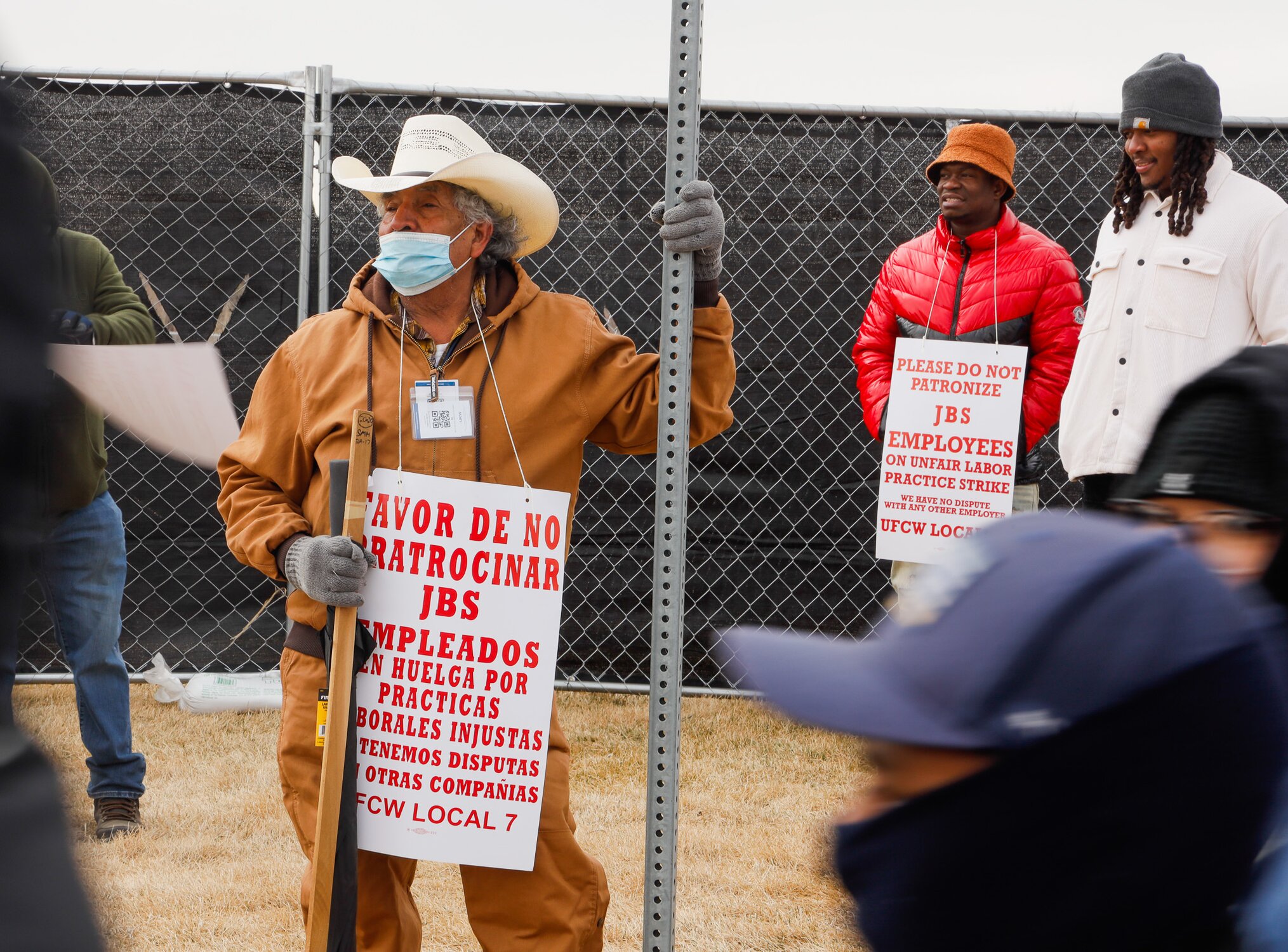
GREELEY, Colo. — Thousands of workers who went on strike at the JBS-owned Swift Beef Co.
processing plant March 16 will return to work tomorrow.
The union, United Food and Commercial Workers Local 7, has yet to reach an agreement with JBS and plans to resume negotiations April 9.
“Workers remain united and will continue to fight until JBS fully ends its unfair labor practices and gives workers a contract offer that protects them, shows workers the respect they deserve, and pays them a livable wage,” Kim Cordova, president of UFCW Local 7, said in an April 4 press release.
Thousands of workers began striking on March 16 following months of negotiations between union representatives and JBS. Key demands from the union include higher wages, new policies surrounding safety equipment and lower health care premiums for employees.
The strike marked the first walkout at a U.S. beef slaughterhouse since 1985, when workers at a Hormel Foods plant went on strike for 13 months.
The Greeley plant can slaughter up to 6,000 cattle per day, accounting for roughly 5% of the country’s beef-processing capacity, according to The Wall Street Journal. During the strike, JBS has largely shifted processing to other plants.
If negotiations fail, the strike could drive beef prices even higher. Last year, beef prices rose 11 to 25% based on the cut due to a cattle shortage. Experts have said that price disruptions will take time to hit consumers.
Rising prices could stand to improve JBS’ negotiating power.
“Amid the Greeley strike and other slaughter plant capacity reductions — including the closure of a major Tyson Foods’ plant in Nebraska — companies are seeing profits increase,” the Associated Press reported.
“It’s not necessarily in favor of the employees,” said Jennifer Martin, associate professor of animal sciences at Colorado State University in an interview with the AP. “The lack of harvest capacity at one facility right now might actually be a benefit to the larger industry in the sense of improving (profit) margins.”
Based on facts, either observed and verified firsthand by the reporter, or reported and verified from knowledgeable sources. To read more about why you can trust the journalism of Rocky Mountain PBS, please visit our editorial standards and practices page.