As Colorado Springs grows, will its conservative political base remain?

COLORADO SPRINGS, Colo. — Socially conservative. "The Evangelical Vatican." Anti-tax.
Known for its sometimes defining stereotypes, 150-year-old Colorado Springs is set to surpass Denver as the state’s most populated city by 2050. And, in 2020, El Paso County became the most populous in the state, topping the City and County of Denver.
But with this rapid growth, the socio-political demographics of Colorado Springs are not necessarily changing, said University of Colorado Colorado Springs (UCCS) professor and chair of the Department of Political Science Josh Dunn. In addition to his role at UCCS, Dunn also writes and serves on the editorial advisory board for Education Next, a quarterly journal created by the conservative Hoover Institution's Koret Task Force on K–12 Education.
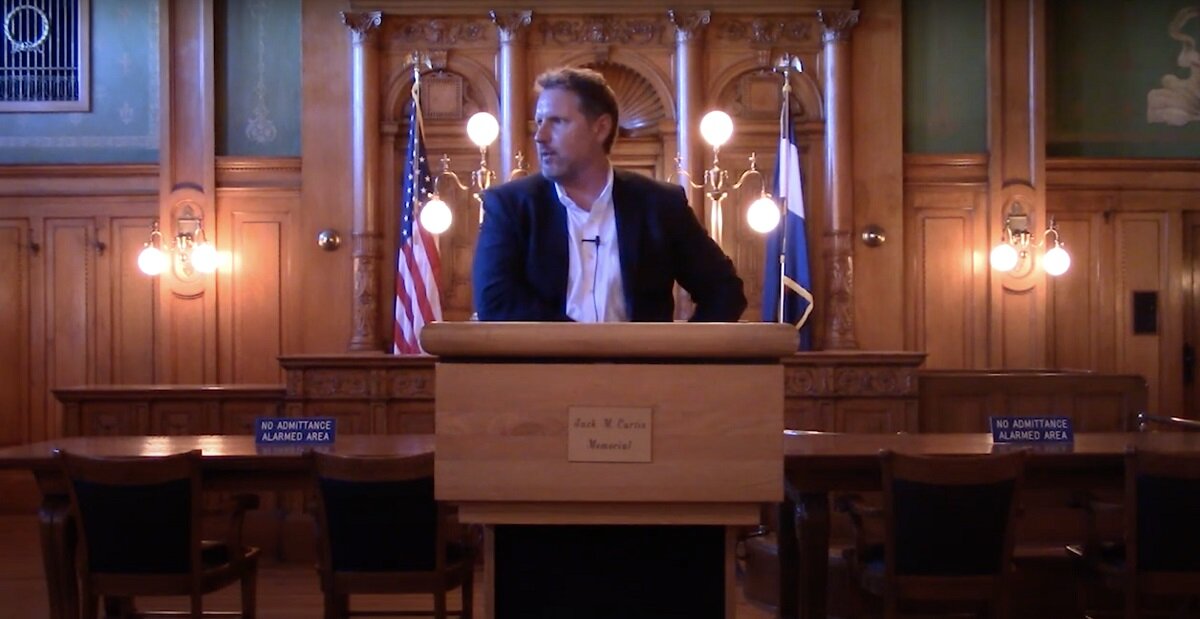
Dunn spoke to a group at the Pioneers Museum in Colorado Springs on Jan. 15 as part of the museum's 2022 lecture series.
Dunn, who is writing a book on the political nuance of Colorado Springs, told Rocky Mountain PBS after his lecture that he was curious to study trends in how a growing population could affect the region’s conservative base. In the last decade, the city has grown by over 17%.
To lean more about how Colorado Springs has changed in the last century and a half, watch "Colorado Experience: Lost & Preserved in Colorado Springs."
Population growth is nothing new, Dunn said — the city has been growing steadily since occupation of these once Ute, Arapaho, Cheyenne, Kiowa, and other Native lands.
In order for the influx to affect the third-most Republican district in the country, “there would have to be a lot more movement,” Dunn found. “A lot of the reason is that people moving here over the years tend to self-select. They’re more Republican and more conservative. Many people work for or retire from the military in Colorado Springs.”
Dunn doesn’t see the millennial influx changing the political environment of the city, either.
“I don’t think the numbers will be significant enough to switch ballots,” he said.
While still solidly red, Colorado Springs had the largest swing against former President Trump of any metro area in the nation between 2016 and 2020. Still, Dunn doesn’t think this equates to any long-lasting impact for Colorado Springs.
“If you look at Colorado Springs, it’s essentially a giant suburb. And if you look at the incumbent — he didn’t run well in suburbs,” Dunn explained.
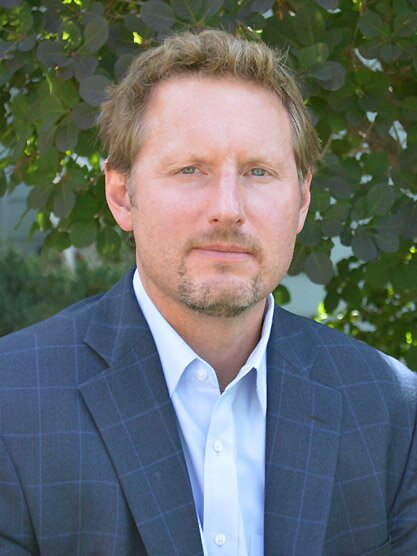
Exploring the myths and realities of Colorado Springs politics is a hobby and a vocation for Dunn, who moved to the city from Virginia in 2004 for a teaching position at UCCS.
“The first thing you have to confront whenever we talk about politics in Colorado Springs is the reputation of the city,” he said.
Before accepting his job, Dunn had no preconceptions of the city, he said, determining only that it was incredibly beautiful, with great weather — “all the stuff everybody always talks about.”
“I also knew about the reputation — alleged mass evangelical migration, Focus on the Family, conservative — I just didn’t think that much about it,” he admitted.
When he arrived, he didn’t feel it, either. The vibe was less religious than other places he’d lived and traveled, he said.
But after talking with colleagues on campus, reading local papers and talking to residents, “the reputation of being a bastion of a particular kind of conservatism seemed to be a big issue for the people in the community,” Dunn said.
These stereotypes can drift into myths, he warned.
The more he researched, the more he found it “fascinating that there can be such gaps between the reputation of the city and the reality of living it,” Dunn said. “The politics of Colorado Springs are much different than some people likely would have expected.”
Dunn’s upcoming book, "Who Governs in God’s City?", studies subsets of interest group politics, and other institutional anomalies, like the local political shift from a Council-manager form of government to a “strong mayor” system.
The book also explores constants throughout Colorado Springs' political history, including what Dunn calls an “old western Rocky Mountain Republicanism — a ‘don’t tax me and leave me alone’ kind of attitude.”
“The military has also been a constant influence," he said. The industry settled as a form of local economy in the 1940s, growing to what is now five total defense installations employing 60,000 people.
Finally, the religious presence is also nothing new, Dunn said, beginning with Colorado Springs’ founding by a Quaker General.
“Starting in the 30s and 40s, you had significant evangelical influences. That continued through history, and was always part of the city. It was Focus on the Family coming in 1991 that really exaggerated that,” said Dunn.
Evangelical institutions supported Amendment 2, a 1992 voter-approved state ballot measure that prohibited anti-discrimination protections related to sexual identity or orientation. It was eventually declared unconstitutional by the Supreme Court in 1996.
Though Focus on the Family and other groups moved on to embrace a more national agenda, Dunn said, that reputation fell back on the city.
“Those issues in some ways solidified the national reputation of Colorado Springs,” he said.
"[Today] that influence does not remain as big as everyone makes it out to be,” said Dunn. “A number of indiscretions within major church institutions dampened a lot of the influence, and, over time, their presence was just less,” he said. “Evangelicals and social conservatives are a prominent part of the city’s population — but far from dominant.”
Colorado Springs is statistically one of the most secular cities in the United States, Dunn said. Only about 20% of people attend church regularly, much lower than the national average, and below Denver. “Las Vegas is even more religious,” he explained.
Still, it’s impossible to measure the social impact, and students and youth in the region reflect feeling the weight of certain religious and cultural values. Though mental health data is lacking for Colorado youth, El Paso County’s suicide rate is rising. Suicide is the second leading cause of death among young people, with LGBTQ+ youth being four times more likely to seriously consider or attempt suicide.
Today, resources and programs supporting LGBTQ+ communities are at the heart of the vibrant culture of Colorado Springs.
Dunn acknowledged that El Paso County and Colorado Springs are “the firewall preventing the state of Colorado from becoming a Democratic state," saying "it would be a multi-decade process, and I don’t think it’s going to happen."
"This is a very conservative city. There’s no doubt about that,” Dunn recognized. “It’s a global reputation.. Still, it turns out that things are a lot more complicated than people realize in Colorado Springs," he said. "And I think that makes things more interesting."
Kate Perdoni is a multimedia journalist with Rocky Mountain PBS and can be reached at kateperdoni@rmpbs.org.