Colorado Jews, Arab and Palestinian-Israeli citizens meet for open dialogue and mutual understanding

The gathering was part of a two-week long tour by the Task Force on Arab Citizens of Israel, an organization started in 2006 to better connect American Jews with Arab citizens of Israel and to raise greater awareness of Arab-Israeli issues in Israel.
“It’s very important to me that people hear from me, and directly from me and not from Jews or Israelis,” said Narjes Abu Frieha, a Muslim Bedouin from Israel’s Tel Sheva desert region. Bedouins are an indigenous group of semi-nomadic communities of various ethnicities including Christians, Muslims, Palestinians and Druze.
About one in five Israeli citizens are Arab, many who identify as Palestinian with Palestinian roots.
While the task force has been around for two decades, the two-year-long speakers fellowship is in its infancy. This year’s nine Arab-Israeli fellows traveled to five cities across the U.S. in May: New York City, Washington, D.C., Baltimore, Denver and Boulder.
“They’re learning about the American Jewish community, too, and we didn’t want them to think the Jewish community is just in New York or D.C.,” said Erica Shaps, U.S. associate director of the task force.
In Denver and Boulder, the group spoke at synagogues, Jewish day schools and other community groups.
Rabbi Dave Yedid, a rabbi of a Denver-based young adults Jewish community called Base, hosted three of the fellows at his home in Lowry. About 20 young American Jews attended.
“I wanted to bring [the fellows] here because it feels like this dialogue around the Israeli Palestinian conflict happens in echo chambers,” Yedid said. “I think there’s curiosity and energy to connect across divides.”
Since the Israel-Hamas war broke out Oct. 7, 2023 and expanded into a war between Israel, Hamas in Gaza, Hezbollah in Lebanon and, most recently, Iran, tensions have heated up in the U.S.
Antisemitic attacks have been on the rise and increasingly violent. They include an arson attack on Pennsylvania Governor Josh Shapiro's residence, the killing of two Israeli embassy staffers in Washington D.C. and a deadly attack on Boulder’s Pearl Street of people gathered to recognize the Israeli hostages taken by Hamas. The majority of American Jews in the U.S. report feeling less safe since Oct. 7.
Likewise, the nation’s largest Muslim civil rights and advocacy organization said it received a record number of complaints of discrimination and Islamophobic attacks in recent years. Some of the most violent include a deadly attack on a mosque in San Diego this month and the murder of a 6-year-old Palestinian boy in Illinois.
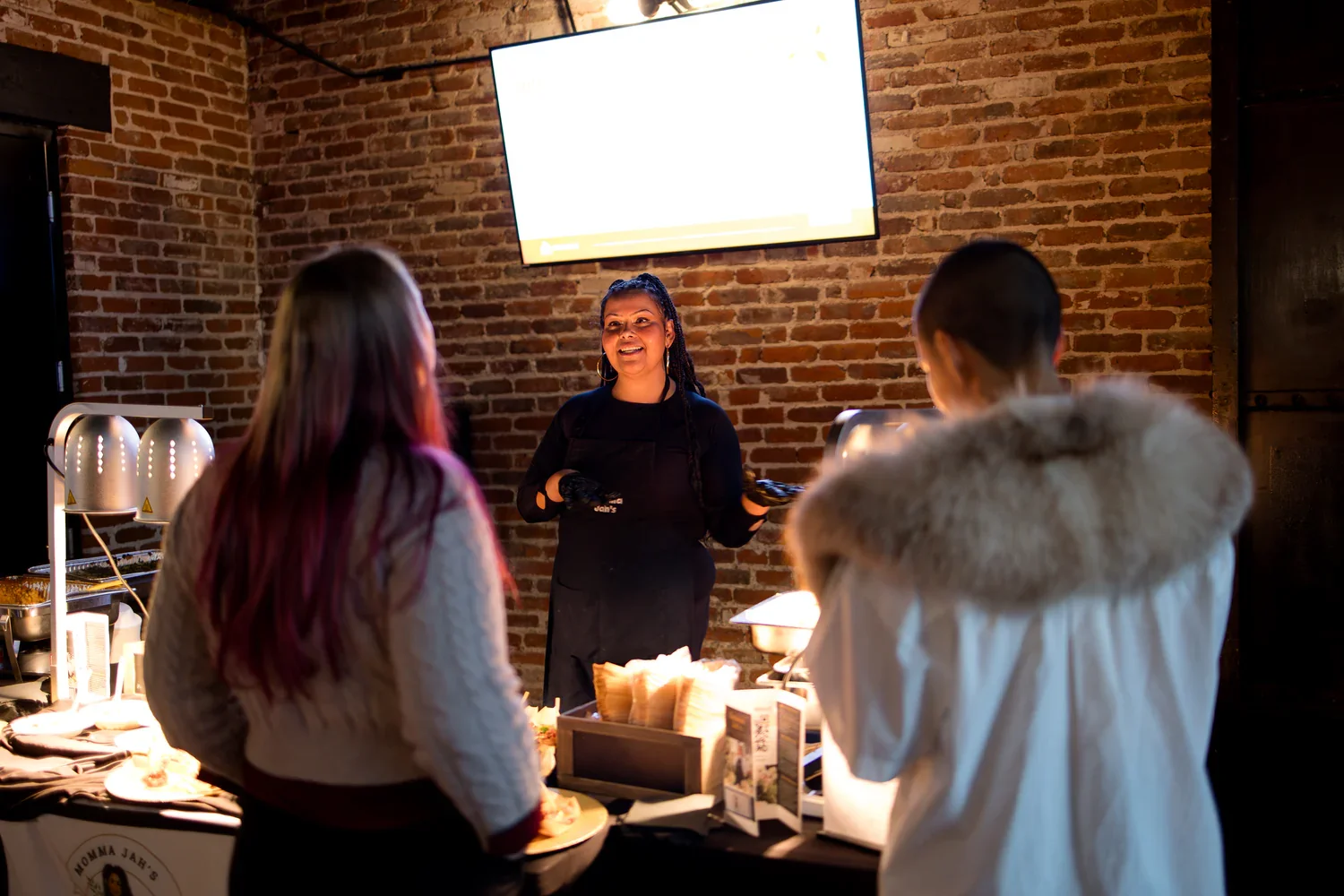
At Yedid’s home, the fellows each shared their experiences and upbringings as Arabs in Israel. They talked about growing up secluded in their own enclaves of Arab-speaking communities, often not learning Hebrew until college, and facing barriers to social mobility and inclusion.
One of the fellows, Eid Adawi, talked about the challenges to becoming an Arab leader and manager at Johnson and Johnson in Israel, and his efforts to change the culture inside the company.
“I learned from a young age that staying quiet meant staying safe,” another Palestinian Israeli told the group. “Post Oct. 7, if I ‘liked’ certain posts, I could be seen as a terrorist sympathizer.”
The fellow asked to remain anonymous because he was afraid that speaking with American Jews and using the word “Israel” in conversation would jeopardize his application for Palestinian citizenship — as well as some grants he’s applying for through Palestinian organizations for a nonprofit he started.
“Holding both words together. It's not easy,” he said. “When people ask me where I’m from, I say ‘Some call it Israel, others call it Palestine, and I’m from both,’” he said, identifying himself as a Palestinian citizen of Israel.
“I expected a lot more resistance [coming here,] and all I got was love and understanding,” the fellow said.
Based on facts, either observed and verified firsthand by the reporter, or reported and verified from knowledgeable sources. To read more about why you can trust the journalism of Rocky Mountain PBS, please visit our editorial standards and practices page.