

Hundreds of Nepali women celebrate Teej in Colorado
share
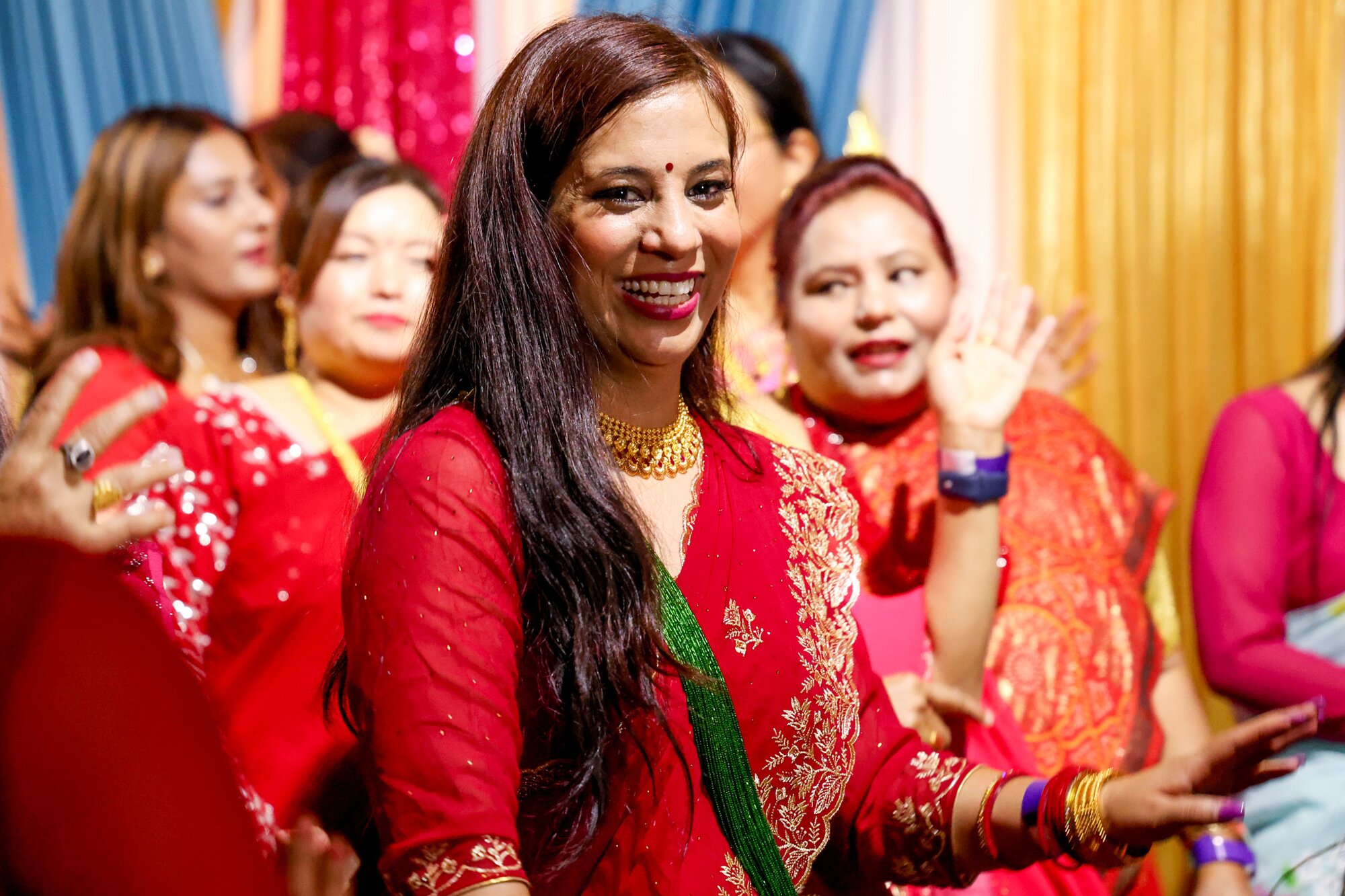
CENTENNIAL, Colo. — Nearly 200 Nepali women gathered in Centennial August 23 to celebrate Teej, also known as Haritalika Teej, joining millions of women across the globe.
Teej is a Hindu festival predominantly celebrated by women in Nepal and certain parts of India to commemorate the strength and perseverance of Goddess Parvati and her union with lord Shiva.
Typically, women on this day observe fast without drinking water for the longevity and health of their husband and gather to sing, dance and pray.
“For us, Teej is more than a festival. It is a way to keep culture alive, strengthen bonds between generations, and create a supportive community where women can thrive even while living far from Nepal,” said Srijana Bhatta, president and founder of Nepali Women Thrive.
NWT is a Colorado-based group committed to honoring and celebrating Nepali cultural traditions. The organization’s women-only Teej event was a vibrant gathering filled with traditional Nepali folk music, singing and dancing, and festive foods.
Not allowing men to take part in NWT’s Teej event was intentional, according to Bhatta.
“In our society, it’s typical to see Nepali wives cook, take care of their children and husbands, plus they also go out and work. So it’s not truly a 50/50. The heavier role falls on the mother,” Bhatta explained. “This event is a platform for just us women that day… to enjoy ourselves with no duties.”
Founded in 2022, NWT’s mission is to support and empower Nepali women — whether by providing a safe space to share their experiences, offering guidance as they adjust to life in the United States or providing support in situations involving gender-based violence.
“For our Nepali daughters, we wanted to ensure that they have this sisterhood,” Bhatta said.
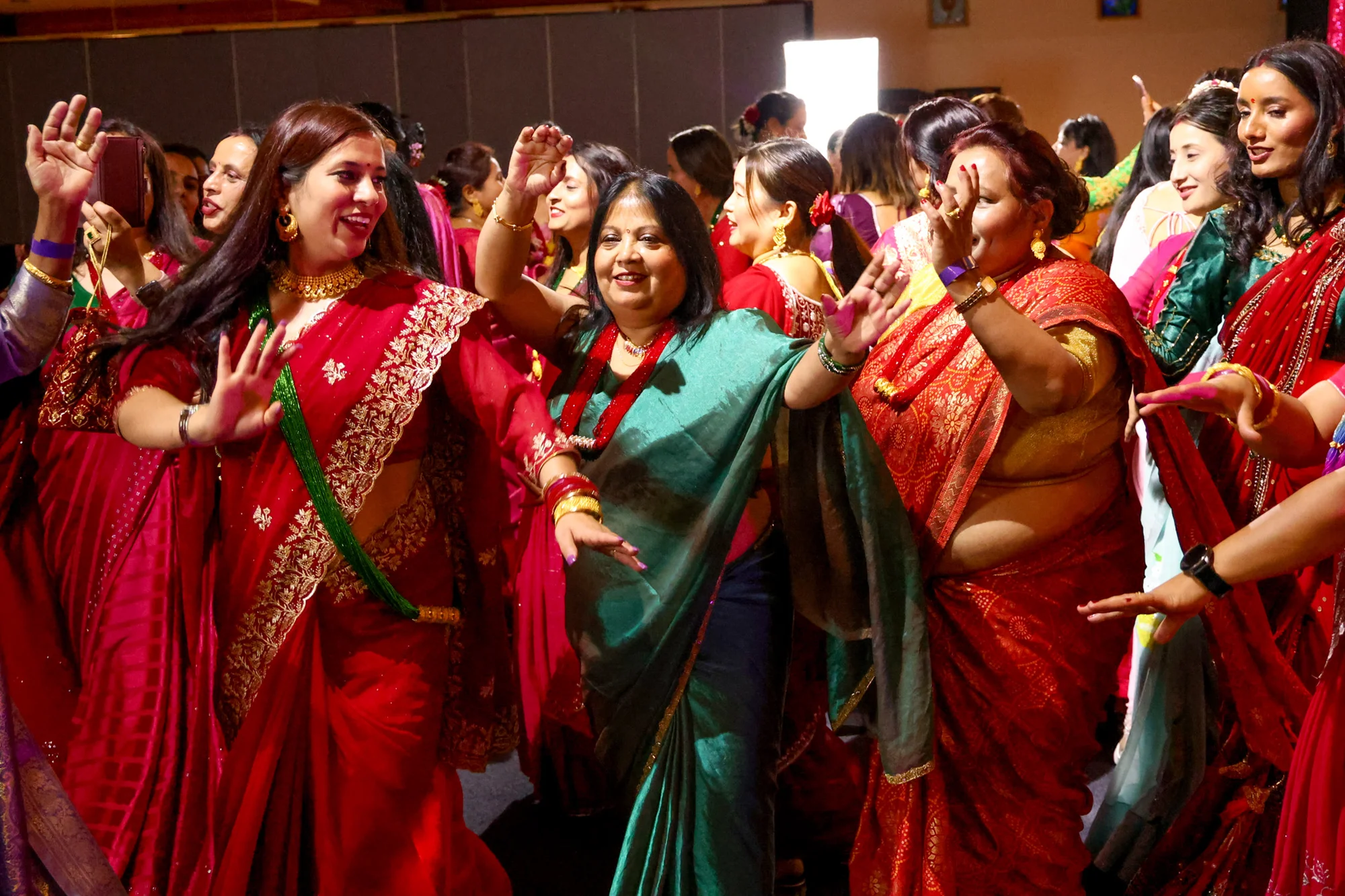
Teej, which coincides with the arrival of the monsoon season, is a series of three interwoven holidays celebrated over the course of a month.
“Teej takes the general spirit of the monsoon as the rebirth of life and the season for love and applies them to recreating the story of the marriage of Shiva with his wife, Parvati, daughter of the Himalaya mountains,” said Steven M. Vose, a historian of South Asian religions and the Bhagwan Suparshvanatha Assistant Professor of Jain Studies at the University of Colorado Denver.
According to the hindu texts, Parvati was originally betrothed to the other major god in the Hindu pantheon, Vishnu. However, her heart was set on Shiva.
“Vishnu is a king and wears princely clothes and is a god of kingship and order. Shiva is an ascetic who wears animal skins and meditates in the mountains,” Vose said. “Parvati was so impressed by seeing him in deep meditation that she herself practiced meditation and asceticism for a long time until she finally built up so much ascetic power that she broke his concentration.”
The first of the three Teej holidays, known as Hariyali Teej (or Green Teej), celebrates Shiva’s agreement to marry Parvati. In Nepal and in many parts of India, married women return to their parents’ home, welcomed with gifts much like the ones they received for their wedding — jewelry, saris and other items for their home.
The second holiday, Kajari Teej, highlights Parvati’s dilemma: she must return home, is in love with Shiva, and they’ve agreed to marry — but she is already betrothed to Vishnu.
“This, the second Teej, leans into one of the most popular poetic tropes of the monsoon season, that is, the anguish of separated lovers,” Vose said. “On this holiday, women often sing songs to Shiva, expressing their longing to be (re-)united with him. The religious longing of the soul to meet God finds a rich and deeply emotional grounding in our world, when lovers are separated at a time when the world is green and full of life and the rains have made the days cool and pleasant — much like English poetry often celebrates springtime as the time for love there. Parvati is pining away for her beloved, Shiva.”
Finally, the most widely celebrated Teej, Haritaalika Teej, honors Parvati’s desperate attempt to be with her true love before she is married to the wrong man. Parvati’s female friends (aalika-s) abduct (harita) her from her father’s house and carry her off to be with Shiva. Moved by his daughter’s resolve, he agrees to their marriage and breaks things off with Vishnu.
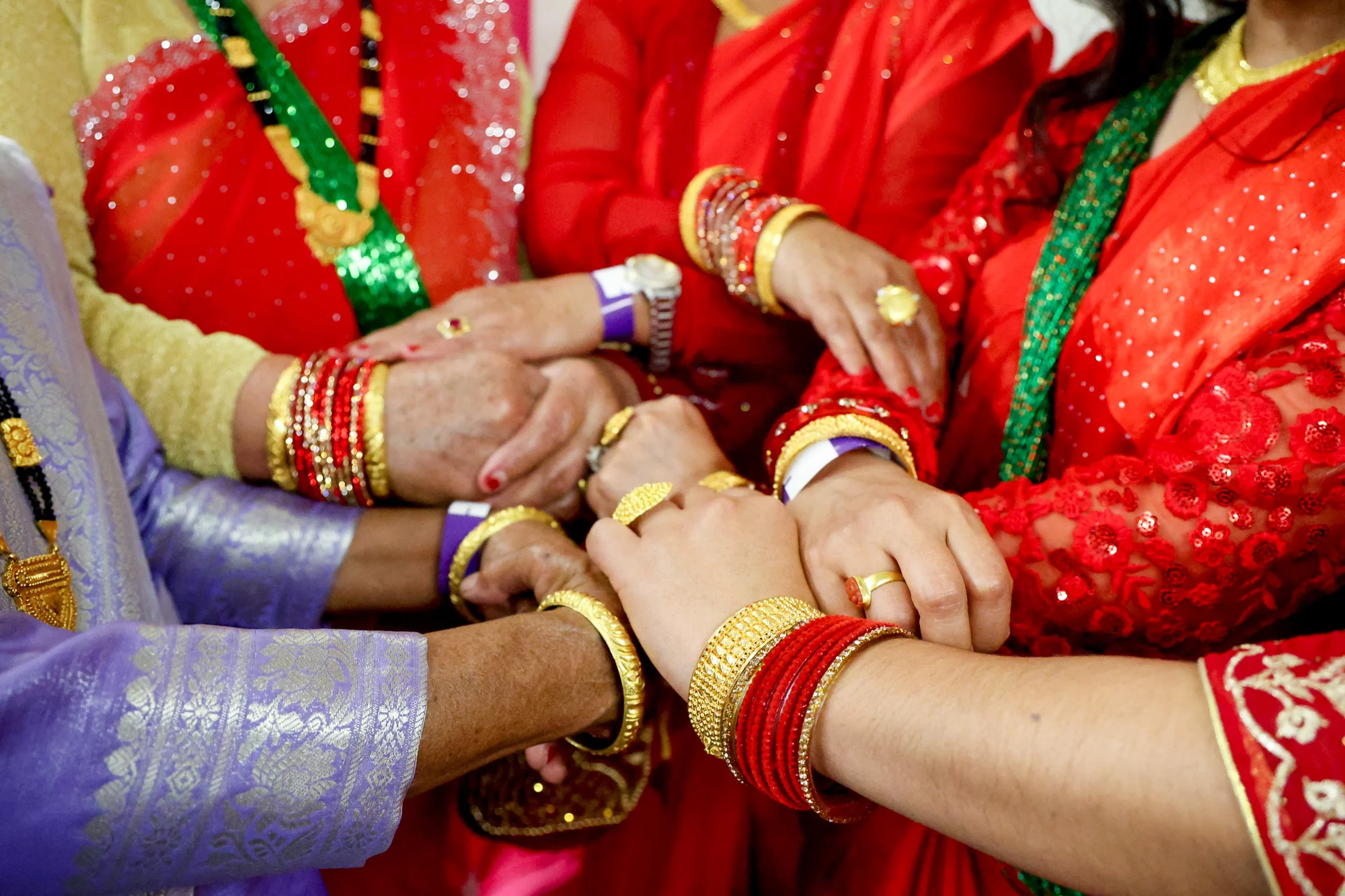
“In Kathmandu, married women recreate this part of the story by dressing in red saris and gold jewelry, which mimics their wedding outfits, and go to the Pashupatinath Temple, which is the largest temple in the area and dedicated to Shiva,” Vose, who has lived and studied in Nepal, said.
Women observe fast for the day for their husband’s longevity and good health.
“In this sense, each married woman is Parvati, and each husband is her Shiva,” Vose said.
In the modern context, as more women in Nepal and South Asia join the workforce, following trends seen in North America and Europe, holidays like Teej can be criticized for their celebration of women’s domesticity.
“On the other hand, women can and often do rewrite the meaning of holidays focused on them, and just as Parvati’s resolve convinced her father to change her marriage arrangement, so, too, may women’s revising of the meaning of Teej help to refigure how men understand their roles in society beyond the domestic sphere,” Vose said.
Type of story: News
Based on facts, either observed and verified firsthand by the reporter, or reported and verified from knowledgeable sources. To read more about why you can trust the journalism of Rocky Mountain PBS, please visit our editorial standards and practices page.
Based on facts, either observed and verified firsthand by the reporter, or reported and verified from knowledgeable sources. To read more about why you can trust the journalism of Rocky Mountain PBS, please visit our editorial standards and practices page.